


Kala’s Guide to Asymmetrical Surfboards: Are They Worth the Hype?

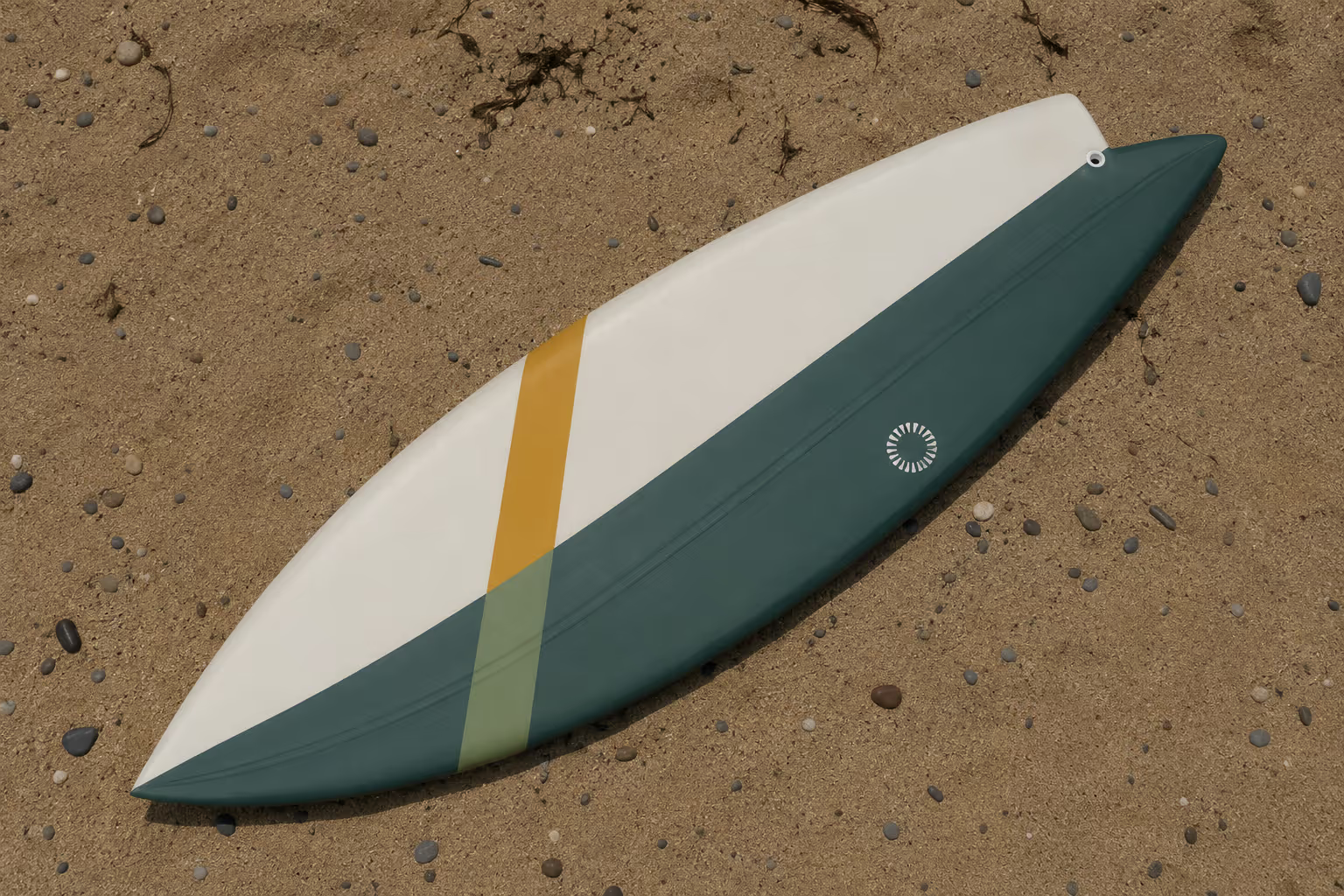
At some point you've probably seen one and thought, “What TF is that?”.
A surfboard that looks a little... off. One rail longer than the other. The tail not quite matching up. Like someone made a mistake in the shaping bay and decided to run with it anyway.
That's an asymmetrical surfboard. And it's not a mistake or mutation.
There's actually a surprisingly solid piece of logic behind the design. And a growing number of shapers and surfers who swear by them. So if you've been curious about what the fuss is about, here's everything you need to know.
What is an asymmetrical surfboard?
An asymmetrical surfboard is exactly what it sounds like. The left and right sides of the board are deliberately shaped differently from each other.
On a conventional surfboard, if you fold it down the stringer (the central line running nose to tail), both halves match up. On an asymmetrical board, they don't.
One side has a longer rail, a different tail shape, different rocker, sometimes even different fins. The two halves are doing different jobs.
The key split is between the toeside and the heelside.
- The toeside rail: The side you press your toes into, is typically longer and straighter. It's built for drive and projection down the line
- The heelside rail: The side you dig your heels into, is typically shorter, more curved and more forgiving. It's built for easier pivoting and more control through backside turns
Why Do Asymmetrical Surfboards Work?
Surfboard nerd alert! Here's a core idea…
Your body does not work the same way on your toeside as it does on your heelside!
When you turn on your toes, your ankles flex naturally, your weight transfers efficiently and you can feel and feather the pressure through the turn. Toeside turns come fairly naturally to most surfers.
Heelside turns are a different story.
Your ankle has less flex in that direction. Your hips sit lower. Your weight doesn't transfer as cleanly. Heels are also bigger, bulkier parts of your feet with less sensitivity. As a result, backside surfing tends to feel more awkward and less powerful than frontside for the vast majority of surfers.
A symmetrical board is designed on the assumption that both sides of your riding are equal. But guess what? They ain’t. An asymmetrical board, on the other hand, is designed to account for that difference, making your heelside feel closer to your toeside.
It's not about going left versus right.
It's about toeside versus heelside. An asym built for a regular footer works on both lefts and rights, it's just tuned to how that surfer's body actually moves.
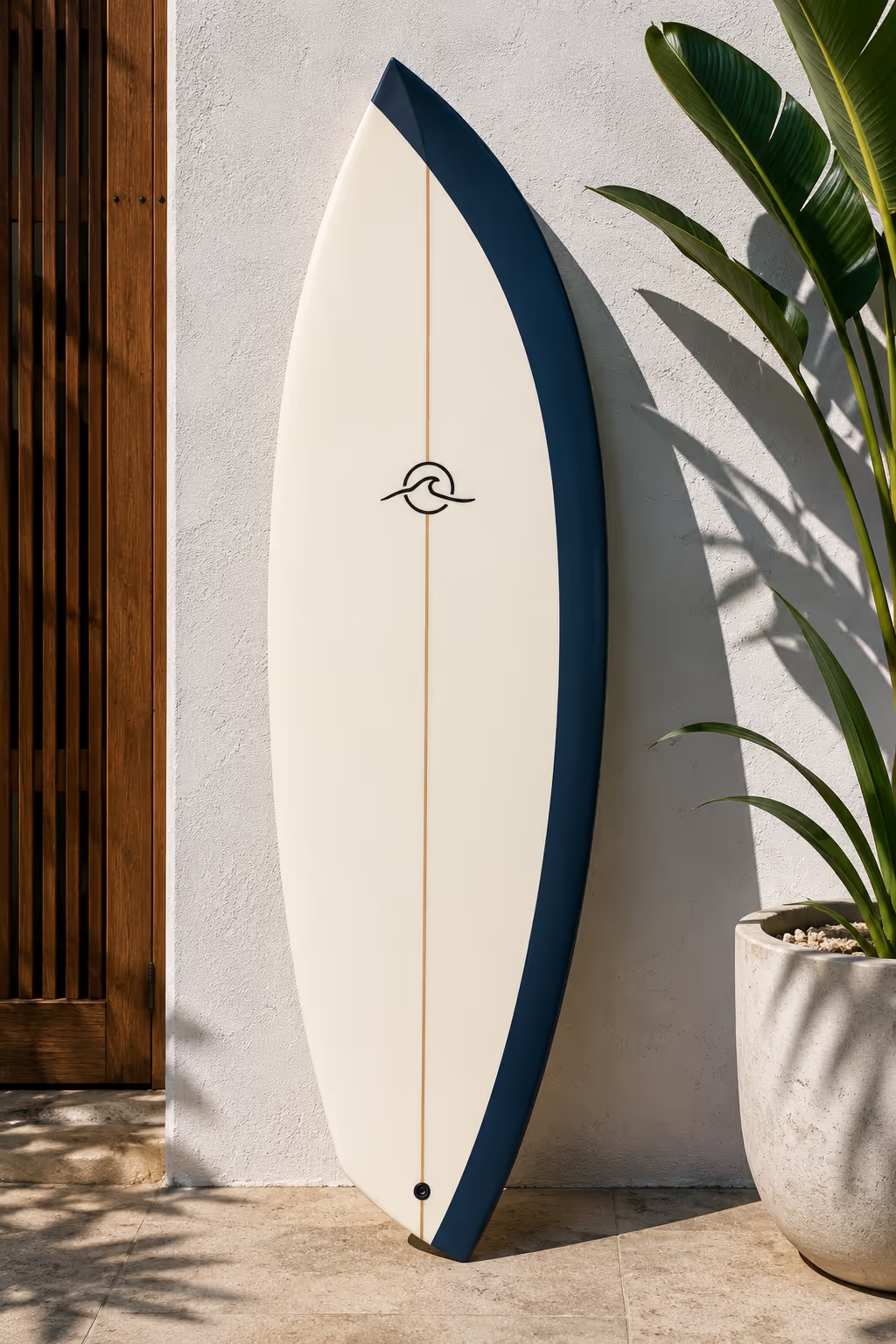
The History of Asymmetrical Surfboards
San Diego shaper Carl Ekstrom is credited with putting this concept into practice.
He designed his first asymmetrical board in 1965 and patented the design shortly afterwards, motivated by wanting to surf his local break Windansea equally well on his backside and frontside without needing two different boards.
Ekstrom found a board he enjoyed riding frontside and a board he enjoyed riding backside.
Rather than choosing between them, he combined the tail shapes and rails of both into a single surfboard. The result was a board that brought out the best of each side at once.
The idea was genuinely ahead of its time. It sat at the fringes of surfboard design for decades while the thruster era took over and standardised what boards looked like.
The resurgence came more recently. Shapers like Matt Biolos from Lost Surfboards, Matt Parker from Album Surfboards and shaping wizard Ryan Burch picked up the concept and ran with it.
Modern asymmetrical boards have become increasingly refined and accessible as a result, though they're still well outside the mainstream. And like a Sumatran tiger, they’re incredibly rare to see in the wild.
What Does an Asymmetrical Surfboard Look Like?
There's no single template. No one-size-fits-all type.
Asymmetrical boards can be shaped into almost any outline and size, from shortboards to mid-lengths to fish shapes. The only fixed rule is that the two halves are intentionally different.
Common features include:
- A longer, straighter toeside rail for drive and hold
- A shorter, more curved heelside rail for easier turning
- Different tail shapes on each side (for example, a squash on the toeside and a rounder shape on the heelside)
- Offset fin placement, with toeside fins typically positioned further back towards the tail and heelside fins placed slightly further forward to add pivot
- Confused as to what we’re yapping about? Check out our surfboard anatomy guide
Some designs go further with different rocker lines on each side, different concaves or a mixed fin setup with more fins on one side than the other. But the idea is always the same… give each side of the board what that side of your body actually needs.
Do Asymmetrical Surfboards Actually Work?
You bet. And the experience of riding one tends to surprise people.
Most surfers have certain boards they know work better on their frontside and others that suit their backside. An asymmetrical board is the attempt to bring out the best of both in a single shape.
One thing that catches people off guard is how normal an asym actually feels in the water. You might expect the mismatched rails to create some kind of weird, unstable sensation. Like you’re disco dancing on a waterbed.
But because you're only ever on one rail at a time, the two sides never try to interfere with each other. The wave is always engaging one rail or the other, not both simultaneously. So instead of feeling strange, it feels... kinda good.
Each rail does its job when it's needed.
Surfers who have spent time on a well-shaped asym consistently report that backside surfing feels noticeably more natural and controllable. Rather than saying "I like this board for lefts and this board for rights", you end up with one that genuinely works for both.
The catch is that getting the design right matters a lot.
An asymmetrical board has to be shaped specifically for you: your stance, your weight, your style and the types of waves you're surfing. A poorly dialled asym will feel worse, not better. There's also a learning curve. Most surfers say it takes a handful of sessions before the board starts to feel fully intuitive.
Ready to Surf in Bali? Secure Your Spot Now!
Who are asymmetrical surfboards best suited to?
Asymmetrical boards are not a beginner's tool. Full stop.
To get anything out of an asym, you need to already be surfing with enough awareness to feel the difference between your toeside and heelside. You need to understand what your backside surfing is lacking, because the board needs to be shaped around that specific weakness.
They tend to suit:
- Intermediate to advanced surfers who feel a clear difference between their frontside and backside
- Surfers who want to push their backside surfing specifically and feel held back by conventional equipment
- Anyone willing to invest in a custom shape and give it proper time to bed in
- Surfers who are genuinely curious about exploring beyond standard board design
If you're still working on the basics like your pop-up, your positioning or getting comfortable in the lineup, a conventional board will serve you far better.
Get those foundations solid first. (Our surfing tips for beginners covers the essentials if you're still building those.)
Are Asymmetrical Surfboards Different for Regular and Goofy Foot Surfers?
This is important. An asymmetrical board is built for either a regular footer or a goofy footer, not both.
Because the design is based on your toeside and heelside, swapping the board between a regular and a goofy footer would put the wrong shape under the wrong foot. The board needs to match your stance, and any shaper working on an asym will design it around your stance from the outset.
Should You Buy an Asymmetrical Surfboard?
That depends entirely on who you are and what you're chasing.
If you're an experienced surfer who has always felt something missing in your backside surfing, an asymmetrical board is genuinely worth giving a shot.
The concept is sound, the execution has improved massively over recent years and the surfers who have committed to them tend to be believers.
If you're looking for a magic bullet that instantly fixes your backside surfing without any effort on your part, prepare to be bummed out.
Like any piece of equipment, an asym only delivers if you know how to rip.
And if you're a beginner or intermediate surfer still building fundamentals? Hold off.
Get your surfing to a point where you can feel the subtle differences between boards, and then revisit the idea. Choosing the right surfboard for your level is always the first step, and an asym is a long way down that road.
FAQ
Q. Can a beginner ride an asymmetrical surfboard?
Hard no. Asymmetrical boards are designed around nuanced differences in how your body surfs toeside versus heelside. You need to be surfing at an intermediate level at least before those differences become meaningful enough to design around.
Q. Does an asymmetrical board only work going one direction?
No. This is one of the most common misconceptions. An asymmetrical board is designed around your body's mechanics, not around wave direction. A regular footer rides one on lefts and rights alike. It's the toeside and heelside difference that matters, not which way the wave is breaking.
Q. Do I need a custom asymmetrical board?
For best results, yes. Off-the-shelf asymmetrical boards exist but a custom shape built around your stance, weight, style and the waves you surf will perform far better. The design only works properly when it's dialled in to you specifically.
Q. Are asymmetrical surfboards more expensive?
Custom shapes of any kind carry a premium. And asymmetrical boards require more time and expertise to get right. Expect to pay more than you would for a standard shape.
Q. Can I get an asymmetrical board in any shape or size?
Yes. The asymmetrical concept can be applied to shortboards, fish shapes, mid-lengths and beyond. The outline and volume can be whatever suits your surfing. The asymmetry is a design principle, not a specific template. That said, you’ll see more performance-y style asymmetricals than fish ones.
Q. Who makes asymmetrical surfboards?
A growing number of custom shapers offer asymmetrical designs. Album Surfboards, Lost Surfboards and various independent shapers have produced well-regarded asymmetrical models. If you're serious about getting one, finding a shaper who has genuine experience with the concept is worth the extra effort.
Q. Can asymmetrical surfboards improve backside surfing?
Yes, that's arguably their biggest selling point. Most asymmetrical boards are designed to make heelside turns feel more natural and responsive by shortening the heelside rail and increasing pivot. That said, they won't magically turn your backside into your frontside overnight. Good technique still matters.
Q. Are asymmetrical surfboards good for small waves?
It depends on the shape. Many asymmetrical fish and groveller designs excel in weaker surf because they combine speed and glide with improved turning performance on one side. Performance-oriented asymmetrical shortboards, however, are often better suited to punchier waves.
H2: Final word
Asymmetrical surfboards are not for everyone. But hey… they're not trying to be.
That said, the idea behind them is genuinely clever. Your body is not symmetrical. Your surfing is not symmetrical. Building a board that acknowledges that and works with it rather than against it makes a lot of sense on paper. In practice it delivers for the surfers willing to commit.
If you're curious, the best thing you can do is talk to a shaper who knows the territory. Do your research. Be honest about your level and your backside surfing. Go in with realistic expectations.
Better yet, book a stay with us and nerd out with our surf coaches. They’re here to point you in the right direction. Always.
More blogs you might like
FAQs
Find answers to your last-minute questions about your upcoming surf adventure with us.
Our packages include accommodation, daily surf lessons, and access to all camp facilities. We also provide surf gear for your convenience. Additional activities can be booked separately.
Travel insurance is highly recommended to cover any unexpected events. It can protect you against cancellations, medical emergencies, and lost belongings. Please check with your provider for specific coverage.
Booking is simple! Visit our Packages & Prices page to select your desired package. You can complete your reservation online or contact us for assistance.
Kala Surf Camp is located in the heart of Bali, close to the best surf spots. Our camp offers a peaceful environment while being just a short distance from vibrant local culture. You'll enjoy easy access to both surf and relaxation.
Yes, date changes can be made depending on availability. Please contact our support team as soon as possible to discuss your options. We aim to accommodate your needs whenever we can.