


Scuba Diving on a Bali Surf Trip: How to Fit a Dive Day Into a Bukit Week


Day four of your Uluwatu week. The swell has dropped to knee high, the forecast says it stays that way until Thursday, and your shoulders are honestly glad about it.
So... can you go diving?
Yes. Same trip, not same day. Dive on the flat day, pick the school before you pick the site, and give yourself a full night before you paddle out again.
We coach surfing, not diving. Nobody at Kala is going to strap a tank on you. But we have watched a lot of guests try to squeeze a dive into a surf week badly: the wrong day, the wrong operator, a dive the afternoon before a 6am session. This is how to do it properly, and who we point people to.
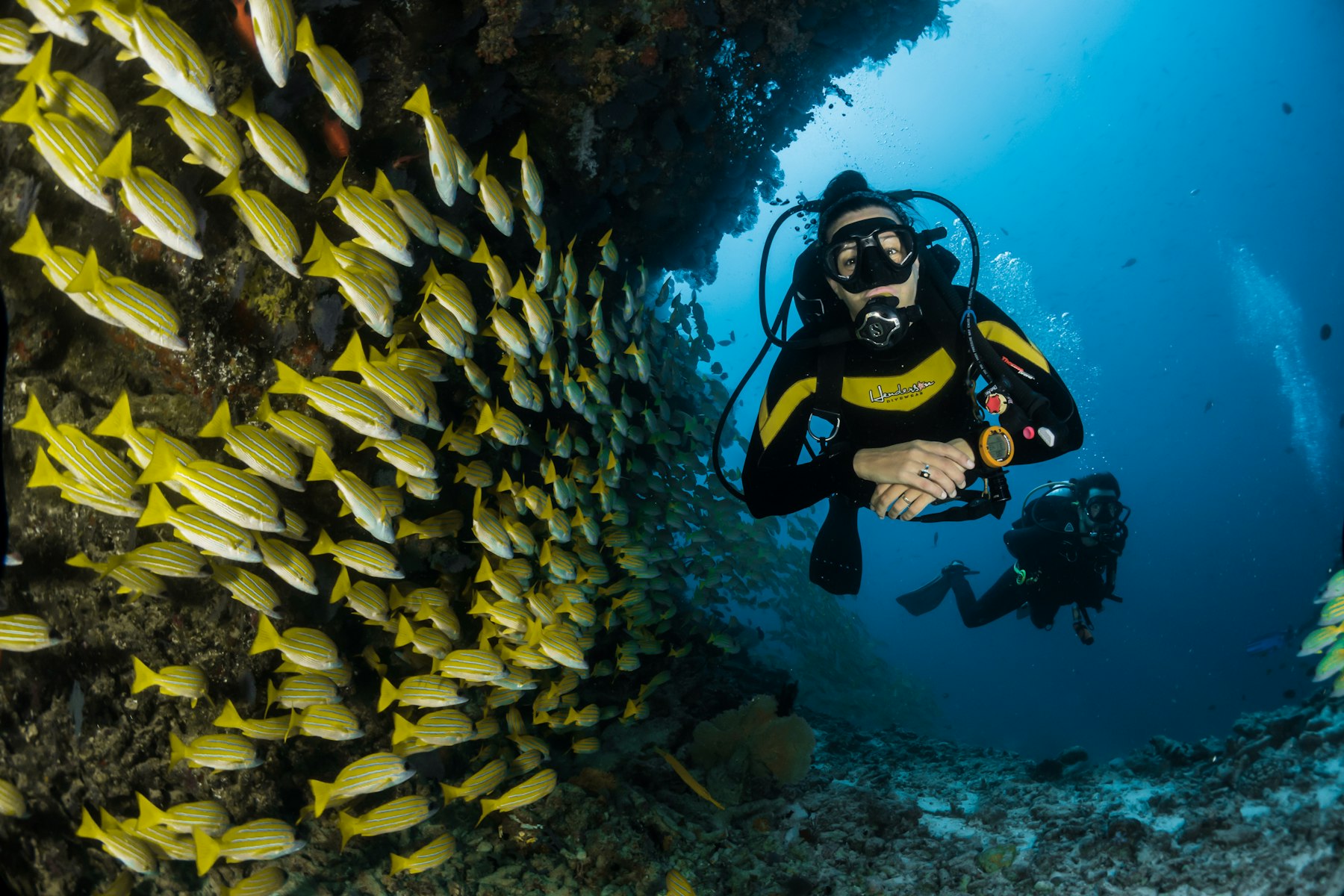
Can you scuba dive and surf on the same Bali trip?
Yes, and plenty of our guests do. The one rule is that diving and surfing do not share a day.
Surfing is exercise. A two hour session at Impossibles is a lot of paddling, a lot of duck diving and the odd sprint for a set. The Divers Alert Network (DAN) guidance is to keep intense physical activity away from diving, ideally 24 hours on either side, and to keep any exercise closer than that as low strain as possible. Bali Diving School's own article on surfing after scuba diving says the same thing in softer words: several hours of recovery as a minimum, longer after deep or repeated dives.
We'll level with you. "Several hours" is not a plan. A plan is: dive day, dinner, sleep, surf the next morning. That is 14 to 16 hours between your last dive and your first paddle, which is not the full 24 DAN talks about, so if you want to be completely by the book, take the afternoon session the next day instead of the dawn one. What you never do is dive at 10am and surf at 4pm.
Which day of a Bukit week should you dive?
The flat day. Or the rest day, if the swell never drops.
A dive trip from Uluwatu is a full day. Pickup from Uluwatu is 6am, the boat leaves Sanur mid morning, and you are back on the Bukit late afternoon. That means you skip both surf sessions, the morning and the afternoon, so pick the day where that costs you least. On a Coaching or Surf School package the video analysis and the two sessions are what you are paying for, so do not burn a pumping day on a boat.
Three things to check before you lock the date:
- Look at the swell forecast for the week on day one, not day four. The flat day is usually visible 3 to 4 days out.
- Do not dive the day before you fly. A Nusa Penida trip is three dives, which DAN treats as repetitive diving, and the DAN flying after diving guidance is a minimum 18 hour surface interval before a flight after multiple dives (12 hours after a single dive). Two days before your flight is the safe slot.
- Tell your coach. If you are on a weekly package we can move a video review or a session around a dive day, but only if we know.
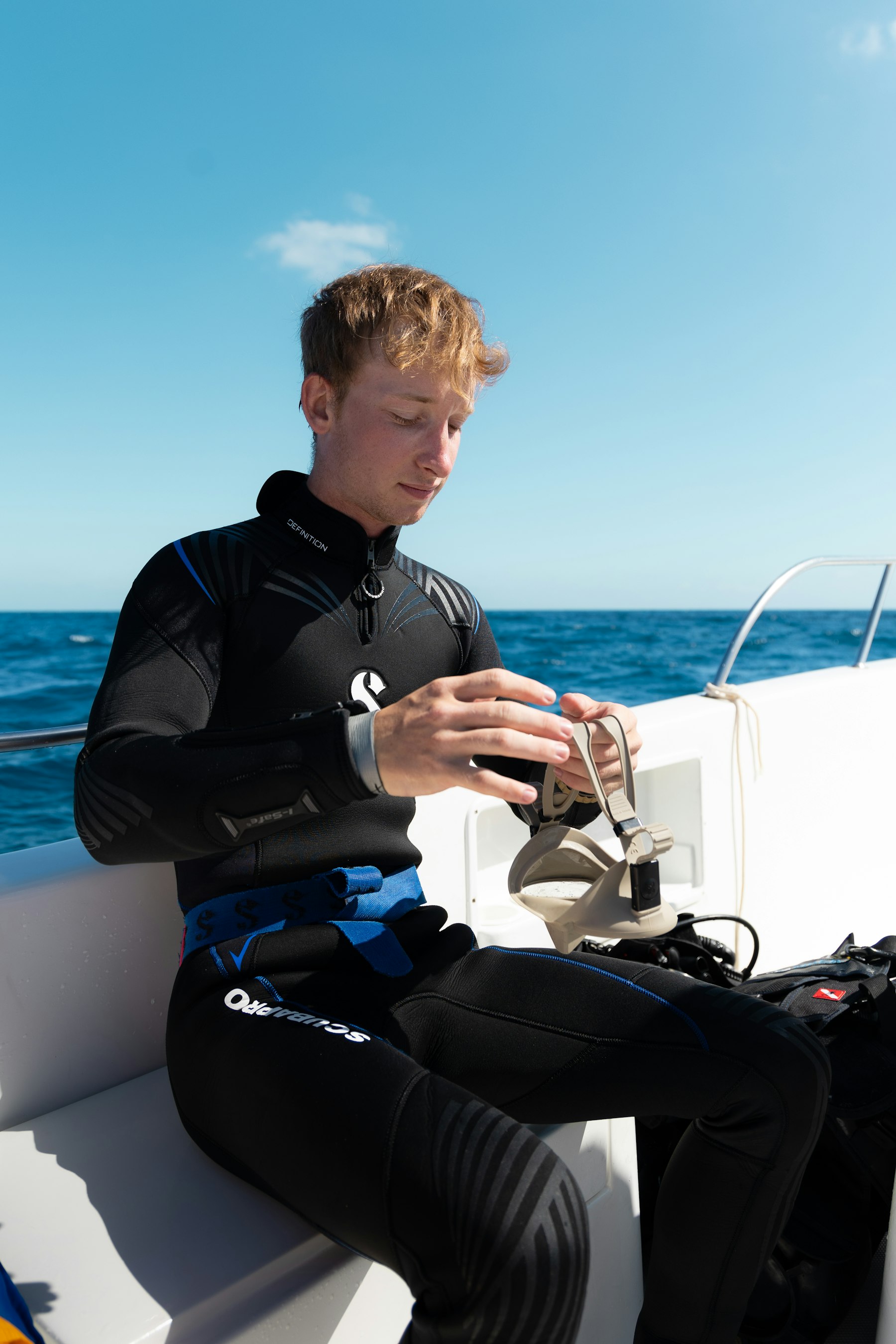
Where do you actually go diving from Uluwatu?
Not Uluwatu. The reef you surf over at Padang Padang and Bingin is a surf reef, not a dive site, and nobody runs dive boats off the Bukit's west coast. Every dive day from here starts with a drive to Sanur on the east side of Denpasar, where the boats leave for Nusa Penida and the road heads north to Padang Bai, Amed and Tulamben.
Bali Diving School includes Uluwatu in its free hotel pickup, and the van leaves the Bukit at 6am to get through the traffic. Here is how the four options compare for someone with one day to spend:
Nusa Penida
The one most of our guests choose. Speedboat from Sanur across the Badung Strait, roughly 45 minutes, then three dives around the island. Manta Point has reef mantas at its cleaning stations year round, and Crystal Bay is where people go hunting mola mola (oceanic sunfish) from August to mid November. The north coast sites (SD Point, Ped, Sental) are drift dives over long reef slopes with turtles and schooling fish. Nusa Penida is also the strongest current diving in Bali, which we get into below.
Tulamben
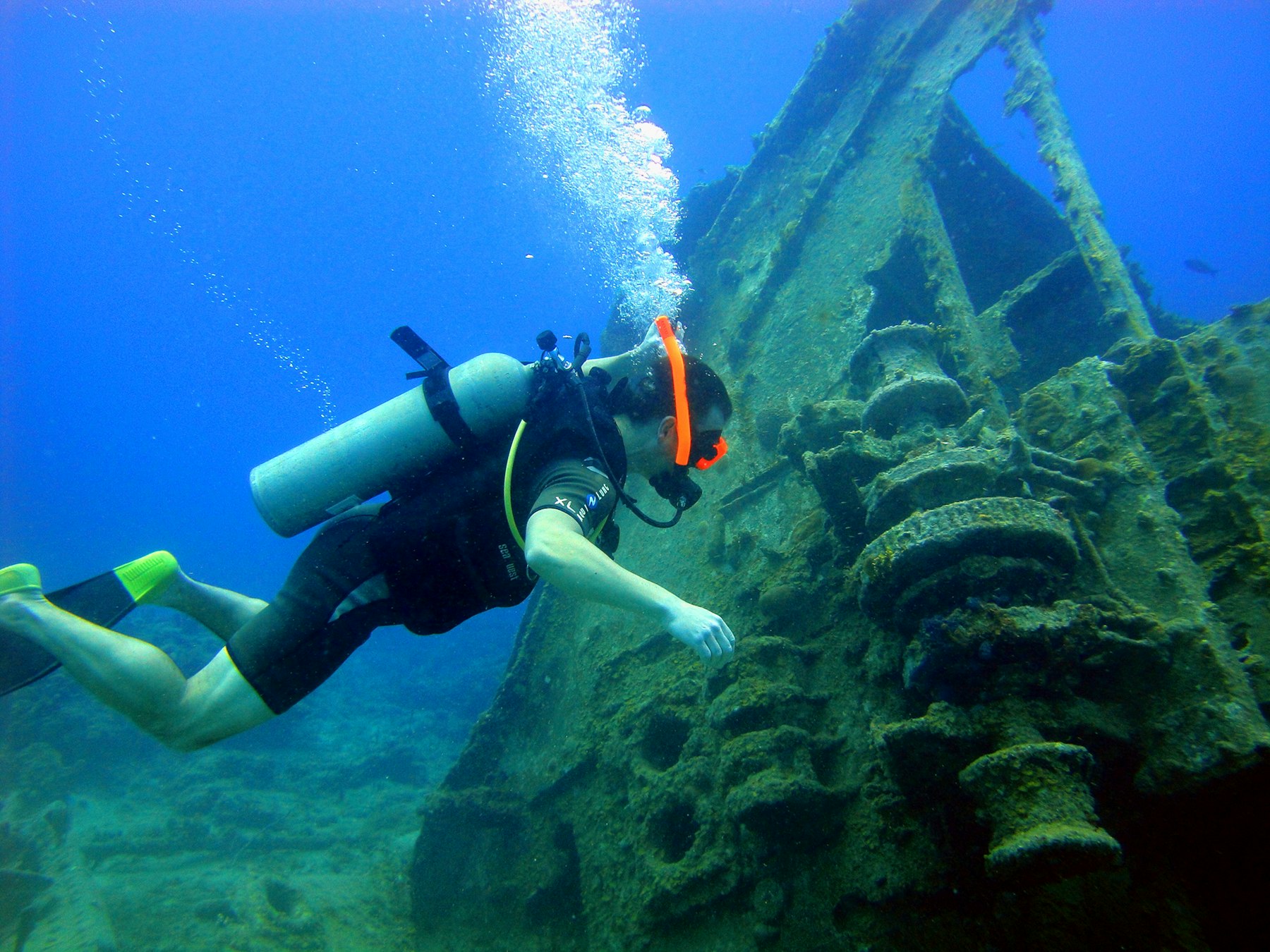
The USAT Liberty, a WWII cargo ship that sits a few metres off a pebble beach on Bali's northeast coast. You walk in from the shore. Calm water, shallow start, huge fish life, and the easiest big-ticket dive on the island for someone with a fresh Open Water card. The catch from Uluwatu is the drive: it is on the far side of Bali and makes for a long day. Bali Diving School picks you up in Uluwatu at 6am and you are usually back between 5 and 6pm.
Padang Bai and Amed
Both are the calm option. Padang Bai is a short boat ride to reef and turtles with no strong current, and Amed is relaxed shore diving over coral slopes. Good choices for a first dive, a nervous diver, or someone who wants to see Bali underwater without the Penida adrenaline. Bali Diving School runs its two dive intro trips at both.
Our pick for a surf week: Nusa Penida if you are a certified diver with some drift experience, Padang Bai or Amed if you are not. Tulamben when you have two spare days, not one.
Why do Indonesia's currents make the dive school matter more than the dive site?
Because around Nusa Penida the current, not the coral, is the thing that decides how your day goes.
Bali sits on the Lombok Strait, one of the main channels where water from the Pacific pushes through the Indonesian islands into the Indian Ocean. That flow squeezes through the gaps between Bali, Nusa Penida and Lombok, and it is why the surf here has so much push... and why the diving does too. On the north coast of Penida it shows up as a steady drift you ride along the reef. At Crystal Bay and Manta Point it can show up as down currents and sudden direction changes, and Crystal Bay in particular has a long record of divers getting into trouble there.
Cold upwellings come with it. In mola season the water can drop to around 21 degrees, which is why Bali Diving School recommends a 5mm wetsuit and a hood for those dives. Thicker neoprene changes your weighting, and bad weighting in a current is how beginners end up somewhere they should not be.
None of that is a reason not to go. It is a reason to care who is in the water with you. Surfers understand this already: you would not paddle out at Uluwatu on a dead low tide with someone who had never surfed it. Same logic. Before you book a dive, ask:
- Is there oxygen on the boat and at the site?
- How many divers per guide, and what certification do the guides hold?
- Do you choose the site on the day based on conditions, or is it fixed when I book?
- Will you tell me no if the site is beyond my level?
A good school answers all four without flinching. A cheap one changes the subject. For the record, Bali Diving School's answer to the second one is three divers per divemaster on a fun dive.
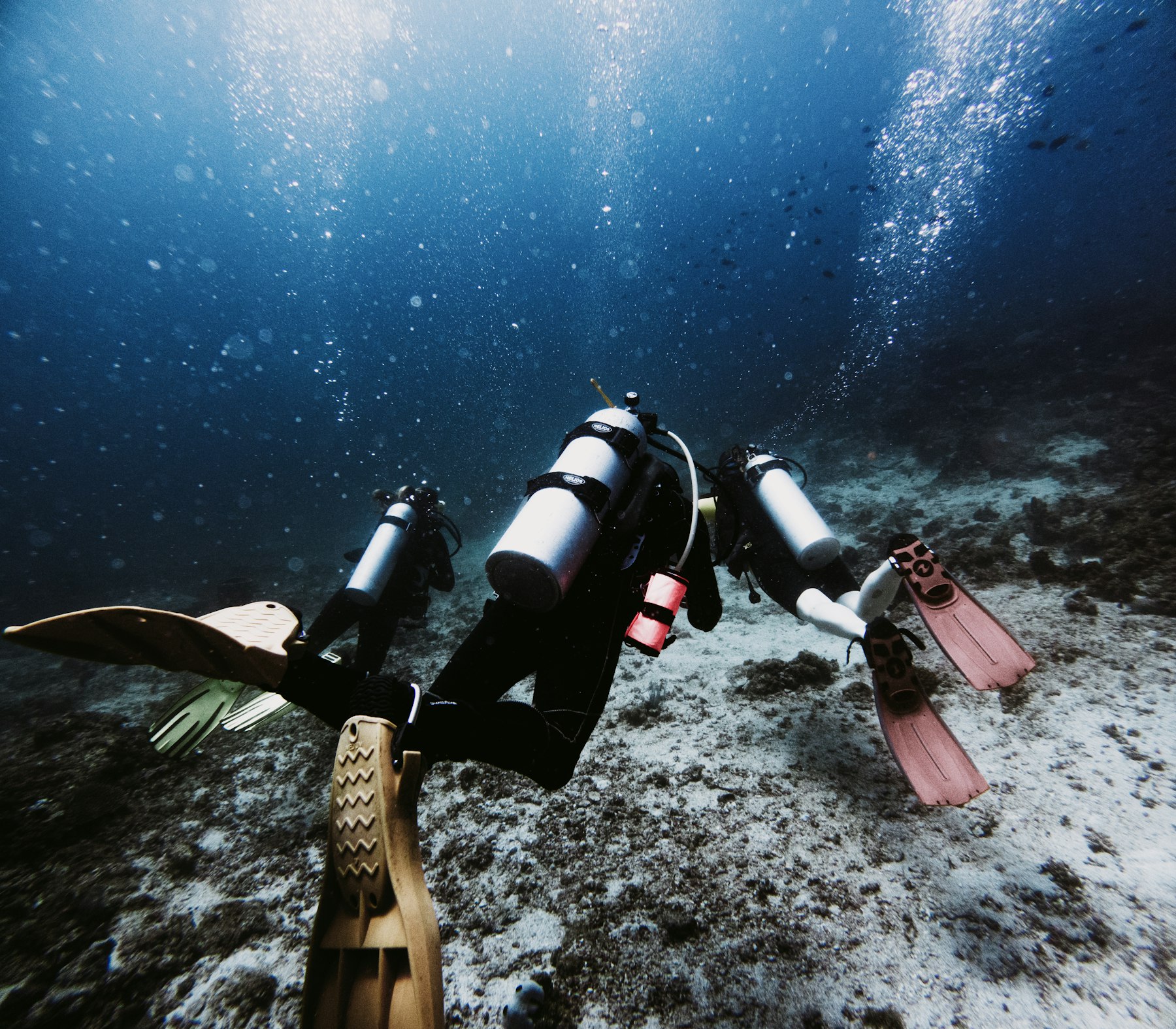
Who do we recommend for diving in Bali?
Bali Diving School in Sanur. They have been running for more than 10 years. The centre is independent rather than registered under one agency, and its instructors each hold their own PADI and SSI professional instructor certifications, so you can do PADI courses with them from Try Scuba through Open Water, Advanced, Rescue and Divemaster, plus daily fun dive trips for certified divers to Nusa Penida, Tulamben, Padang Bai, Amed and Menjangan.
The things that matter to us, taken from their own site: oxygen kits at every dive site, Aqualung and Scubapro equipment on a regular service schedule, a fully insured operation, and guides who dive these sites every week rather than once a season. Lectures and course materials are available in English, Indonesian and Chinese. Free morning pickup runs from Sanur, Kuta, Seminyak, Legian, Denpasar, Nusa Dua and Uluwatu (6am from the Bukit, because of the traffic). Group sizes are capped: one instructor per student on intro dives, three certified divers per divemaster on fun dives, and two students per instructor on Nusa Penida courses. Their guide Dhika gets named in review after review for patience with first-timers.
They also wrote the piece we linked above on surfing after diving, which is the only article we have found from a Bali dive operator that takes the surfer's side of the question seriously.
Ready to Surf in Bali? Secure Your Spot Now!
How much does a dive day cost from Uluwatu?
Published prices on the Bali Diving School price page as of November 2026, per person, including return hotel transport, lunch, dive equipment, snack, soft drink and dive site entrance fees:
- Nusa Penida, 3 dives, certified divers: Rp 3,500,000
- Tulamben, 2 dives: Rp 2,200,000
- Padang Bai, 2 dives: Rp 2,500,000
- Amed, 2 dives: Rp 2,200,000
- Menjangan, 3 dives: Rp 3,800,000
- Intro Scuba (no certification), Tulamben, Padang Bai or Amed, 2 dives: Rp 2,500,000
- Intro Scuba, Nusa Penida, 3 dives: Rp 4,300,000
Their site says prices are negotiable if you contact them directly and that a group booking brings the per person cost down, so if four of you from the camp want to go on the same flat day, ask. Their cheapest day is the Rp 2,200,000 Tulamben or Amed trip, so that is the from price. The lower figure in the header of their price page is out of date.
For context against the rest of your week, a Nusa Penida dive day costs about the same as three to four nights of the Surf Guiding package. Worth it once. Not something to do twice in a seven night stay unless diving is the reason you came.
Never dived before? What are your options on a surf week?
Two, and one of them is a bad idea on a short trip.
The good option is an Intro Scuba day. No certification, a briefing and a shallow confined water session with an instructor (one instructor per student on their intro days), then two guided dives to a maximum of 12 metres. Bali Diving School runs these at Padang Bai, Amed and Tulamben for Rp 2,500,000, or at Nusa Penida for Rp 4,300,000. One day out of your week, and you get to see whether you like breathing underwater before you spend serious money on it.
The bad idea, on a seven night surf trip, is the full Open Water course. It costs Rp 8,700,000 and it takes three to four days of theory, pool and open water dives. That is half your surf week gone, plus the no surfing rule on each of those days. If you want the card, add days to the trip or do it on a separate one. Do not try to do both in a week and do neither properly.
There is a third option that does not involve a tank at all. Aquatic Apes Freediving runs courses out of our camp because our saltwater pool is deep enough for the training, and freediving is the one water skill that actually feeds straight back into your surfing. Start with what freediving is and what depth does to a freediver, and ask us about course dates when you book. If you just want a mask and fins and a turtle, our snorkeling trips need no training at all.
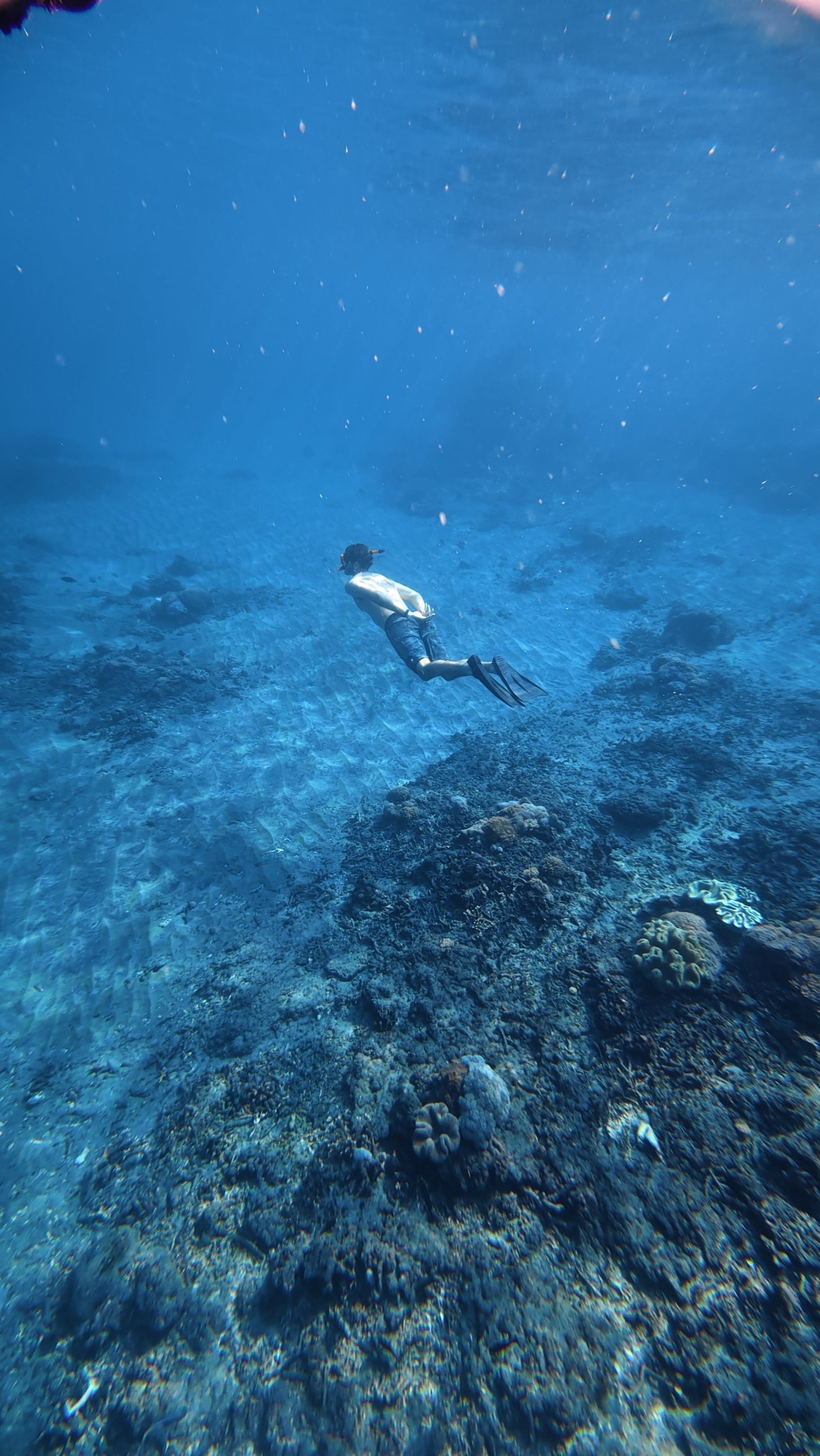
How long after diving can you surf again?
The next day at the earliest. Here is the full picture so you can make your own call:
- Same day: no. Not after a Padang Bai reef dive, not after an intro dive, not after anything. Your body is still offloading nitrogen for hours after you surface, and heavy exertion during that window raises the risk of decompression sickness.
- Next morning: roughly 14 to 16 hours. Most divers and most dive pros treat this as fine for moderate exercise. It is inside DAN's conservative 24 hour window, so if you are the cautious type, or you did three deep dives at Penida in cold water, make it the afternoon session.
- Surf first, dive later: fine, as long as you are not wrecked. Do not turn up to a 7am boat after a 5am session on three hours sleep. Dehydration and fatigue both make DCS more likely, and Bali's sun does not help.
- Drink water. Boring, true, and the single cheapest thing you can do for both sports.
If anything feels off after a dive (joint pain, unusual tiredness, tingling, dizziness), you do not paddle out and you do not wait and see. You call the dive school, who will know the nearest chamber, and you let them make the call.
When is the best time of year to combine surfing and diving in Bali?
Dry season, which is good news, because that is when you were coming anyway.
The Bukit's surf season runs roughly April to October on the southeast trades (the Bali surf seasons guide has the month by month). Bali Diving School's seasons article puts the best overall diving window at April to November, with mantas at Manta Point year round (April is the month for mating trains), and mola mola from August to mid November, peaking August and September. So a July or August surf trip lands in the sweet spot for both, with the trade-off that August water around Penida can be cold.
Wet season (December to March) is quieter for both. The Bukit still gets waves, the east side of Bali gets more rain, and the diving at Tulamben, Amed and Padang Bai stays workable year round while Penida gets rougher crossings.
If you are extending the trip east anyway, read our Lembongan surf guide before you go. Lembongan is 20 minutes from the Penida dive sites, which makes it the easiest place in Bali to surf one day and dive the next without a van. We do not run Lembongan trips ourselves, so that leg is on you.
FAQ
Q. Can you scuba dive and surf on the same day in Bali?
No. Dive one day, surf the next. DAN recommends keeping intense exercise away from diving by about 24 hours, and surfing counts as intense exercise. The next morning is the practical minimum most divers use, and the next afternoon is the conservative one.
Q. Is diving in Nusa Penida safe for beginners?
Parts of it. The north coast drift sites are run for Open Water divers every day. Crystal Bay and Manta Point have unpredictable down currents and are where most incidents happen, so a good school will only take you there when conditions and your experience allow. Choose the operator for its safety habits (oxygen on board, no more than three divers per guide, site chosen on the day) rather than for the cheapest price.
Q. How much does a day of scuba diving cost from Uluwatu?
Bali Diving School's published 2026 prices are Rp 3,500,000 for three dives at Nusa Penida and Rp 2,200,000 for two dives at Tulamben or Amed, including hotel transport, lunch, gear and entrance fees. Intro dives for non-certified divers start at Rp 2,500,000. Prices are negotiable for groups.
Q. Can I dive the day before I fly home?
Not advisable. DAN's guidance is a minimum 12 hour surface interval before flying after a single dive and 18 hours after repetitive dives or multiple days of diving. A three dive day at Nusa Penida is repetitive diving, so make your dive day at least two days before your flight.
Q. Do I need a wetsuit to dive in Bali?
Usually a 3mm is enough, but from August to mid November cold upwellings around Nusa Penida can take the water down to around 21 degrees. Bali Diving School recommends a 5mm suit and a hood for mola mola dives in that period. Rental suits are included in their trip price.
Ready to plan the surf half?
Pick your dive day once you can see the flat spell in the forecast, book it with a school that answers the four safety questions above, and leave the rest of the week to us. Our coaches will tell you which afternoon to take off and which dawn session you really do not want to miss.
Not sure which surf level you are or how a week at Kala runs? Have a look at the packages and prices and send us a message.
More blogs you might like

FAQs
Find answers to your last-minute questions about your upcoming surf adventure with us.
Our packages include accommodation, daily surf lessons, and access to all camp facilities. We also provide surf gear for your convenience. Additional activities can be booked separately.
Travel insurance is highly recommended to cover any unexpected events. It can protect you against cancellations, medical emergencies, and lost belongings. Please check with your provider for specific coverage.
Booking is simple! Visit our Packages & Prices page to select your desired package. You can complete your reservation online or contact us for assistance.
Kala Surf Camp is located in the heart of Bali, close to the best surf spots. Our camp offers a peaceful environment while being just a short distance from vibrant local culture. You'll enjoy easy access to both surf and relaxation.
Yes, date changes can be made depending on availability. Please contact our support team as soon as possible to discuss your options. We aim to accommodate your needs whenever we can.