


Surfboard Fin Setups Explained: Single Fin, Twin, Thruster, Quad & 2+1

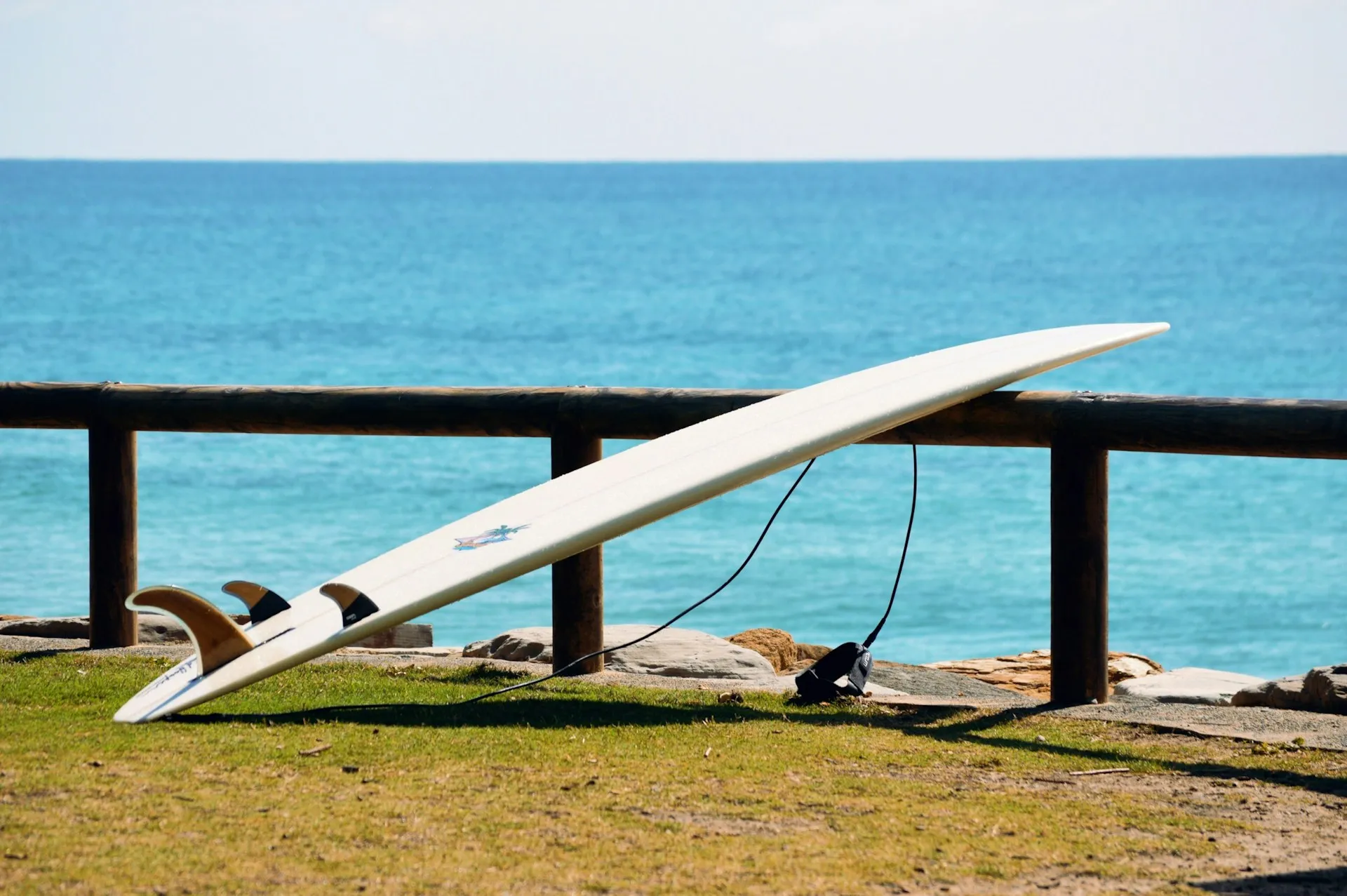
Pick up any surfboard and flip it over. Those little blades underneath? They’re your fins. And they’re a pretty big deal.
They’re what stop your board from sliding sideways across the wave face. They give you control, drive and direction. Without them you'd basically be riding a very expensive plank. A door. A McDonalds tray.
But here's the thing. Change the fin setup and you change how the whole board feels.
Same board, completely different ride. That's why understanding fins is one of the fastest ways to level up your surfing. Or at least get another sensation out of your board.
In this guide we break down the five main fin setups, what each one does, which conditions it suits and who it's best for.
Whether you're brand new to surfing or just curious about the hardware under your feet, this one's for you. (And if you want the full picture on what makes a surfboard tick, check out our surfboard anatomy guide too).
Why do fins matter so much?
Think of fins as the steering and grip of your surfboard.
- The bigger the fins, the more control and stability you get
- The smaller the fins, the more speed and the looser the board feels
The shape, size and number of fins all affect how your board responds. But the biggest variable of all is the setup itself. How many fins you run and where they sit changes everything about the way a board surfs.
We’ve been coaching surfing for years, and in our experience, every setup is a trade-off.
More hold and stability usually means a little less speed. More freedom through turns can mean a little less control in powerful conditions. The sweet spot depends on your level, your style and the waves you're riding.
Single fin
The original. The classic. The grandaddy of all fin setups.
A single fin is exactly what it sounds like: one large central fin sitting towards the tail of the board. It was the go-to setup from the early days of modern surfing right through to the late 1970s and it's still going strong on longboards today.
How does it surf?
Smooth, flowing and drawn out.
A single fin produces long, sweeping turns rather than quick snappy ones. The board tracks predictably down the line and feels stable underfoot once you're moving.
Because there's only one fin, there's less drag in the water, which helps the board maintain speed across flatter sections of the wave. The flip side is that tight, critical turns are harder to pull off.
Best for
- Longboards and logs (9-foot plus longboards designed for noseriding)… this is the natural home of the single fin
- Mellow, rolling waves where a smooth glide suits the conditions
- Surfers who enjoy a more relaxed, traditional approach to wave riding
Ideal conditions
Small to medium waves with a gentle peel. Fat, slow waves that roll for ages. Big, cruisy swells where you want to trim and glide rather than hack and slash.

Twin fin
The twinny setup. Two fins. Equal size. One on each side of the tail. A retro style of fin configuration that has made a massive comeback. And for good reason.
Twin fins first appeared in the late 1970s thanks to Aussie surfer Mark Richards, who used them to win four consecutive world titles. The setup fell out of favour when the thruster arrived, but surfers eventually came back around to the fun, free feeling that a twin provides.
How does it surf?
Fast and loose.
A twin fin has more speed than a single because the two side fins generate a lot of lift and drive. The board feels lively, skatey and responsive.
The trade-off is that without a centre fin, the tail can feel a bit slippery, especially on steeper waves or during heavy bottom turns. When the wave gets serious, twins can get squirrelly in a way that thrusters and quads don't.
Best for
- Fish boards and retro shapes which are designed around this kind of loose, flowing feel
- Small to medium waves where you want to generate your own speed and flow
- Surfers who like a skatey, playful style over a locked-in, powerful approach
- Anyone who wants to mix things up and try something different from the standard thruster
Ideal conditions
Punchy, playful beach breaks. Fun little waves that reward speed and fluidity. Not ideal for overhead barrels or heavy conditions where you need serious hold.
Thruster (three fins)
The thruster is the most popular fin setup in the world.
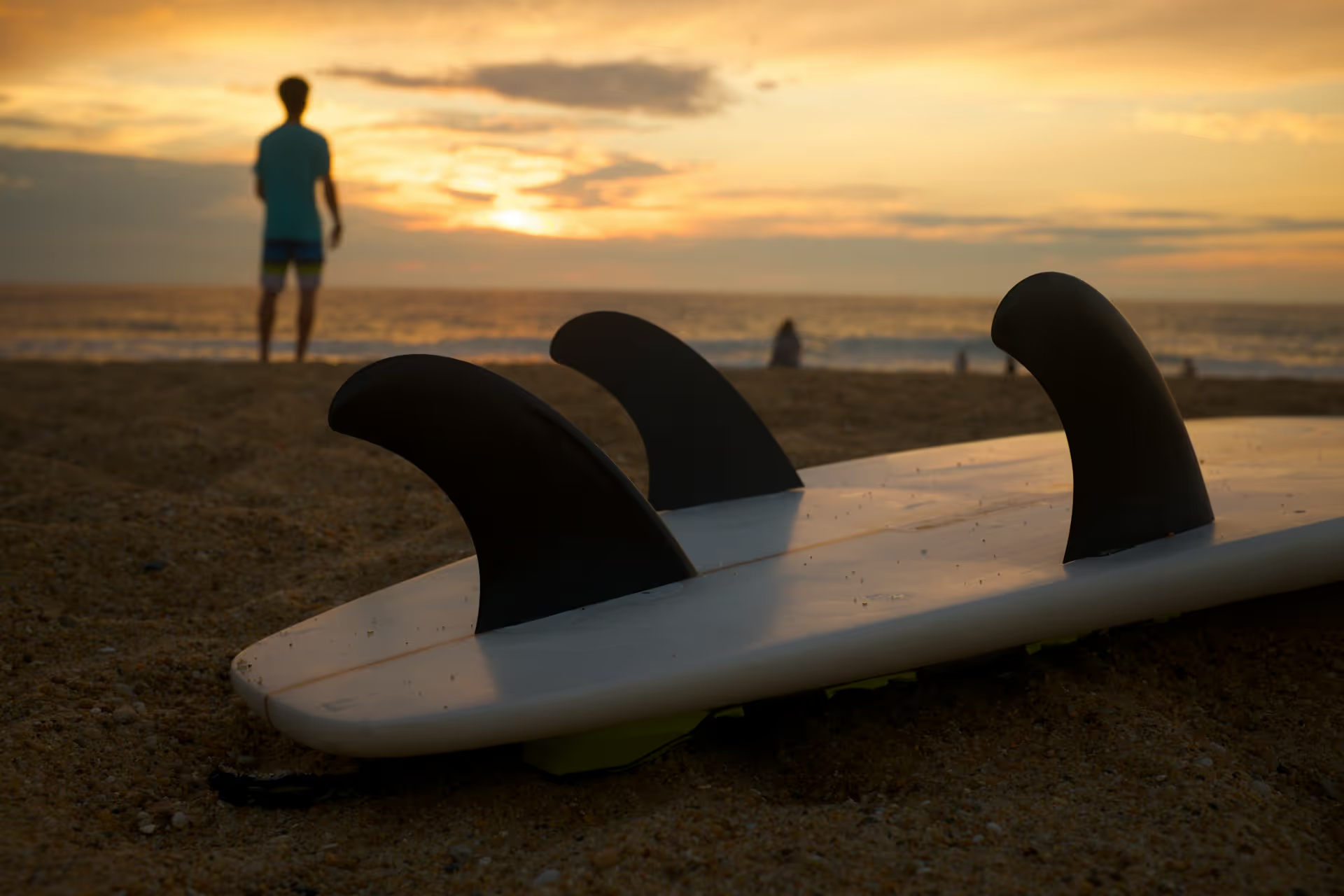
Three fins, two on the sides and one in the centre, all roughly the same size. If someone hands you a shortboard, there's a very good chance it has a thruster setup.
Another Aussie surfer Simon Anderson invented the thruster in 1980 as a direct response to the limitations of earlier setups. The combination of side fins and a centre fin solved a lot of problems at once and quickly became the standard for high-performance surfing.
How does it surf?
Balanced. Powerful. Versatile.
The two side fins generate drive and lift while the centre fin adds stability and directional control. Together they give you the ability to push hard off the bottom, drive through turns and tackle critical sections of the wave.
The thruster has a bit more drag than a twin or quad but trades that for control and confidence. For most surfers in most conditions, it's the setup that makes the most sense.
All of our beginner boards are thrusters because they’re predictable, which makes learning to stand up and go across a wave infinitely easier.
Best for
- All surfers, but especially beginners… the thruster forgives mistakes and rewards progress
- High-performance shortboards in a wide range of conditions
- Surfers who want one setup that works everywhere… this is your default
- Critical, powerful waves where control and hold matter
Ideal conditions
Works well in almost anything. Particularly strong in quality, overhead waves where you want to surf with precision and power. This is the setup most professionals and coaches will recommend if you're just getting started.
Learn more about how to match your surfing level to the board if you’re starting out.
Ready to Surf in Bali? Secure Your Spot Now!
Quad (four fins)
Quad setup. Four fins.
Two near the rails at the front of the fin cluster, two smaller ones set behind them. No centre fin.
The quad is a natural evolution of the twin fin idea. Take the speed and looseness of a twin, add an extra pair of fins for more drive and hold. And you've got something that works in a surprisingly wide range of conditions.
How does it surf?
Fast. Really fast. Like your board has gobbled the golden speed boost mushroom from Mario Kart.
Without a centre fin there's less drag in the water, which means the board picks up speed easily and channels water out the tail quickly. Quads feel great in small, weak surf where generating momentum is the challenge.
That said, quads also shine in big, hollow waves. With the back fins positioned further towards the tail, the setup gives you serious hold on steep wave faces and in barrels. Advanced surfers love the extra speed on high lines and the ability to maintain rail contact through critical sections.
The one thing to be aware of: quads can feel a little loose when you first switch to them, especially coming from a thruster. Give it a few sessions and you'll find your groove.
Best for
- Small, weak surf where speed is everything
- Hollow, fast waves and barrel hunting
- Fish boards and larger shortboards that suit a four-fin layout
- Intermediate to advanced surfers looking to experiment with feel and speed
Ideal conditions
Great across a wide range of waves. At its best in clean, powerful surf or in really small, soft conditions. A versatile choice once you're comfortable with how it feels.
2+1
The 2+1 setup looks like a thruster at first glance but works quite differently.
You have one large central fin and two smaller fins on the sides, often called sidebites.
Where a thruster uses three fins of roughly equal size, the 2+1 has a dominant centre fin doing most of the work with the side fins adding support and control on the rail.
How does it surf?
Like a single fin with a bit more grip.
The large centre fin gives you that smooth, flowing single-fin feeling but the sidebites add extra control and lift when the board goes up on its rail. It's a more predictable, stable setup than a pure single but still has that classic, drawn-out feel.
One thing to know: 2+1 setups have more drag than a standard thruster or single fin. That's the trade-off for the extra stability.
Best for
- Longboards and mid-length boards that suit a larger centre fin
- Surfers who love the single-fin feel but want a bit more help on the rail
- Small to medium waves with a forgiving, mellow character
- Anyone wanting to progress from a pure single fin without switching to a full thruster
Ideal conditions
Small to medium surf, whether clean or choppy. A solid choice for longboard sessions where you want both flow and a little extra stability. Not typically used on shortboards or fish, but hey… rules are made to be broken.
Which fin setup is right for you?
Good question. Here's the short version:
- Never surfed before? Go with a thruster. It's the most forgiving setup and gives you the best foundation
- Learning on a longboard? A single fin or 2+1 will suit you perfectly. Plenty of glide and stability
- Intermediate surfer wanting to experiment? Try a twin fin for fun, loose sessions or a quad when you want extra speed
- More advanced and chasing performance? Your thruster is still your best all-rounder. Add a quad for small days or big barrels. Experiment with a twinny
- Not sure and want maximum flexibility? Look for a board with a five-fin box setup. That lets you run single, twin, thruster or quad without buying multiple boards
The best thing you can do is try out different setups.
Most removable fin systems like FCS and Futures make it easy to swap setups between sessions. Try different things, pay attention to how the board feels and let the waves guide you.
If you want help figuring out the right setup for your level and the waves you'll be surfing, our coaches in Uluwatu are always happy to talk fins. It's one of the most interesting conversations in surfing.
Check out our guide on how to read a surf forecast to figure out which fin setup might suit the conditions before you paddle out.

FAQ
Q. What is the most popular fin setup?
The thruster. Three fins, balanced performance, works in almost every condition. It’s been the standard for high-performance surfing since Simon Anderson introduced it in 1980.
Q. What fin setup should a beginner use?
Start with a thruster. It gives you stability, control and enough responsiveness to learn proper technique. As you improve, you can experiment with twins and quads.
Q. What is the difference between a thruster and a 2+1?
Both use three fins but they're quite different in practice. A thruster has three fins of roughly equal size. A 2+1 has a larger central fin doing most of the work with two smaller sidebites for rail control. The 2+1 is typically found on longboards.
Q. Are quad fins faster than thrusters?
Generally yes, in the right conditions. Without a centre fin, quads have less drag which helps the board pick up speed more easily. In small, weak surf especially, quads can feel noticeably faster. In powerful, critical waves most surfers still prefer the control of a thruster.
Q. Can I use the same fins on any board?
You need to check which fin system your board uses. FCS and Futures are the two most common. Fins from one system won't fit in boxes from the other, so check your board before buying fins.
Q. What is a five-fin box setup?
A five-fin board has boxes for five fins but is not meant to be ridden with all five in at once. It simply gives you the option to run any configuration you like, single, twin, thruster or quad, without needing a different board for each one.
Q. Can you ride with 5 fins in?
You technically can, but you will never see someone surfing (hopefully) with 5 fins in. iA five-fin board has boxes for five fins but is not meant to be ridden with all five in at once. It simply gives you the option to run any configuration you like, single, twin, thruster or quad, without needing a different board for each one.
Q. Does fin size matter?
Yes, quite a bit. Bigger fins give you more hold and stability but can feel stiff and draggy. Smaller fins are looser and faster but less forgiving in powerful surf. As a general rule, heavier surfers and bigger waves call for bigger fins. It also depends on how tall you are and how much you weigh, if you are unsure it would be best to ask someone in a surfshop.
Q. Does the material fins are made from matter?
More than most people realise, but only if you are on the intermediate/expert level. Plastic fins are stiff and cheap, great for beginners. Fibreglass fins have more flex and feel livelier underfoot. Carbon fins are the most responsive but also the most expensive. The difference is subtle at first but you'll notice it as you progress.
Final word
Fins are one of the most underrated parts of the surfing puzzle. Swap them around and you can completely transform how a board rides without spending a cent on new hardware.
Start simple. Learn on a thruster. Then… let your curiosity get the better of you.
Try a twin on a fun little day. Throw a quad in when you're chasing speed. Pay attention to what you feel under your feet and let that guide your choices. The more you understand your equipment, the better you'll surf. And the better you surf, the more fun you have.
That's the whole point, right?
See you in the water.
More blogs you might like
FAQs
Find answers to your last-minute questions about your upcoming surf adventure with us.
Our packages include accommodation, daily surf lessons, and access to all camp facilities. We also provide surf gear for your convenience. Additional activities can be booked separately.
Travel insurance is highly recommended to cover any unexpected events. It can protect you against cancellations, medical emergencies, and lost belongings. Please check with your provider for specific coverage.
Booking is simple! Visit our Packages & Prices page to select your desired package. You can complete your reservation online or contact us for assistance.
Kala Surf Camp is located in the heart of Bali, close to the best surf spots. Our camp offers a peaceful environment while being just a short distance from vibrant local culture. You'll enjoy easy access to both surf and relaxation.
Yes, date changes can be made depending on availability. Please contact our support team as soon as possible to discuss your options. We aim to accommodate your needs whenever we can.