


What's Happening with the Uluwatu Seawall? What Surfers Need to Know

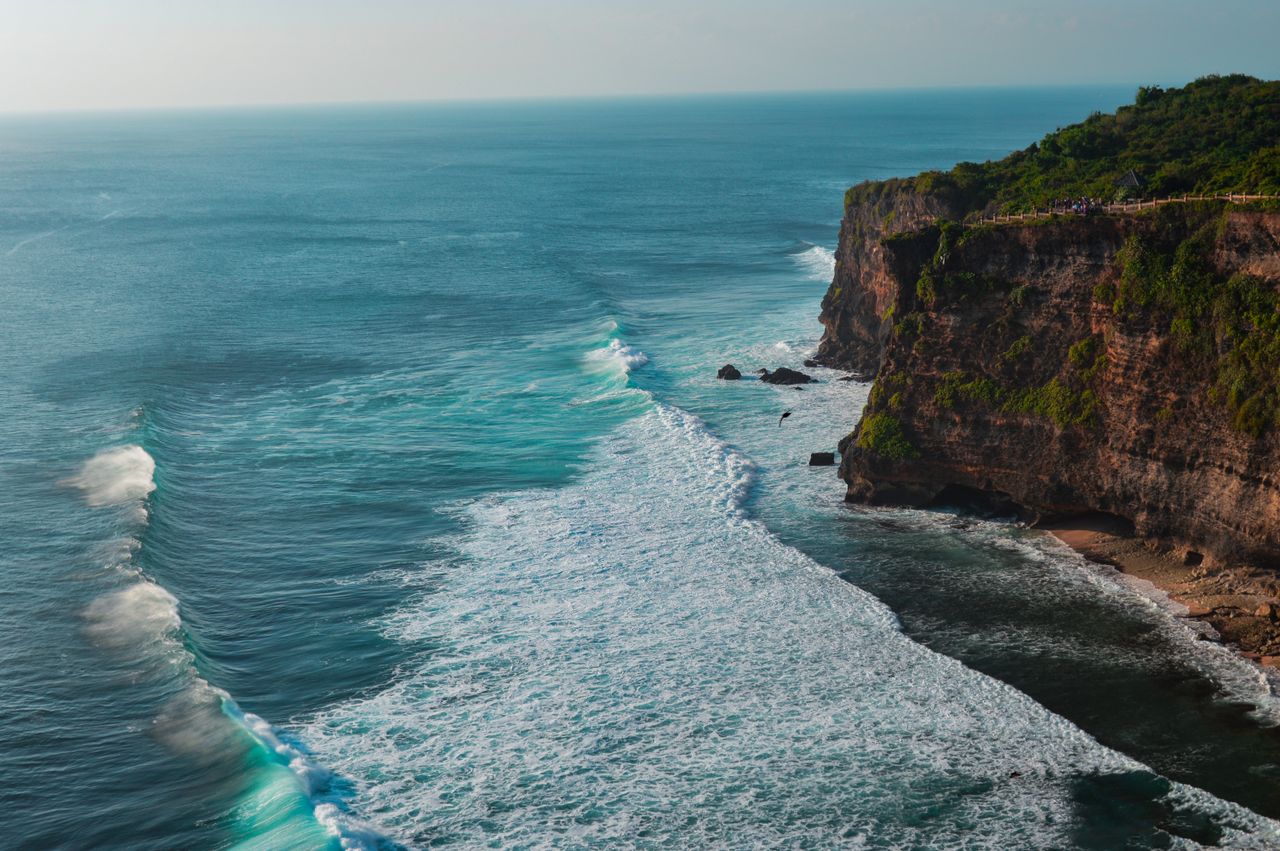
If you've started following surfing accounts on Instagram, you might've seen a whole lot of commotion around something called the "Uluwatu seawall".
Diggers on the cliff at Uluwatu. Concrete seeping into the lineup. Angry comments stacked underneath, thousands of them. Outrage. Confusion. Even a little fear.
The real questions though: is the wave being wrecked? What's it doing to the reef? Should you still book that Bali trip?
Short version: the waves are still firing and your trip is very much on, but there's a bigger story worth understanding before you paddle out.
Here's what you need to know (and where we stand).
First, what even is the Uluwatu seawall?
Uluwatu isn't just a wave. It's a cliff, a cave you paddle out through and a temple perched on the edge of it all.
Uluwatu Temple is one of Bali's nine directional temples. It sits about 70 metres above the ocean. Locals believe it protects the whole island from evil. So far it's done a pretty sweet job.
The story is older than the Instagram coverage lets on. A significant crack was first discovered in the cliff back in 1992, after a major earthquake, and for decades the official response was simply limiting visitor numbers. When more cracks appeared along the southern cliff face beneath the temple, the government finally decided it had to act.
In 2024 the Indonesian government announced a roughly 78.6 billion rupiah project (about $5 million USD) to shore up the cliff. The plan has two main parts:
- A 25-metre seawall pushing out into the ocean, built to take the punch of the waves at the base of the cliff
- A road cut into the cliff face. First for machinery and later on maybe pedestrians
That second bit is what really kicked things off when the first photos leaked in 2024.
Why are surfers so fired up about it?
Protecting a 1,000-year-old temple sounds like a good thing, right?
The anger isn't about whether the temple should be looked after. It's more about how it's been handled.
The project was listed under an emergency designation, which legally allowed it to skip the environmental impact assessment and the public comment period. So it's not that the paperwork got lost. The rules were set aside on purpose, and for a structure built in the ocean at one of the most famous waves on earth, that assessment should've been step one.
This isn't just us and a few locals grumbling either. Kelly Slater weighed in publicly when the footage dropped, Save The Waves sounded the alarm, and their petition gathered over 17,000 signatures.
Because that wave is a major drawcard for tourism in Indonesia.
People smarter than us call it an economic multiplier, which means it creates jobs and brings money to the island. Reefs are delicate ecosystems too. And any change to the shape of a reef can change the wave that breaks over it.
When the wave in question is Uluwatu, well, you can see why people are kinda shook.
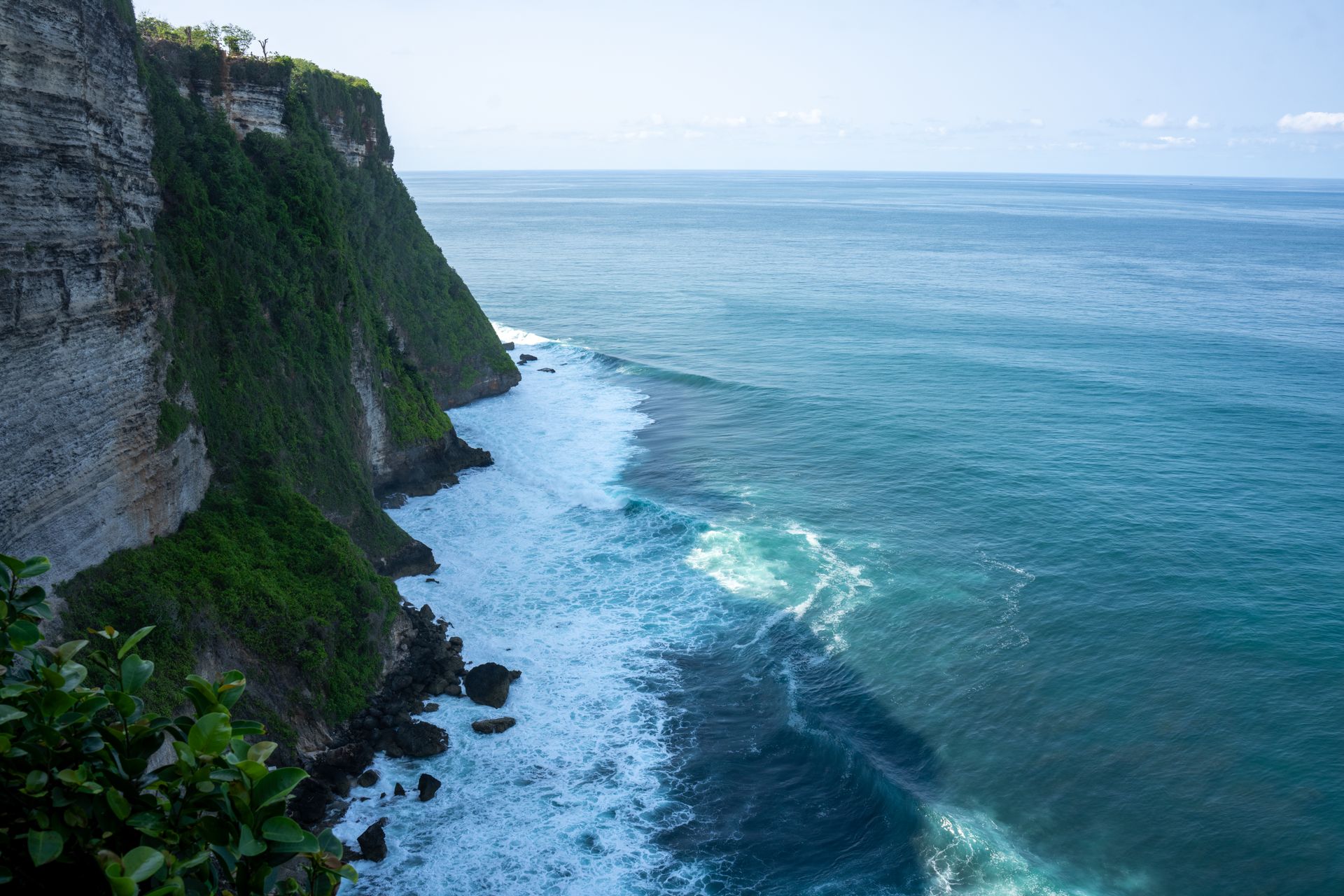
So has the wave actually changed?
Not yet, no.
And we're not saying that secondhand. We surf Lurches and Secrets, the breaks closest to the works, and from the lineup you can see the whole project clear as day: the road cut, the machinery, the wall taking shape at the base of the cliff. It's well underway up there. And still, in the water, nothing. The wave hasn't shifted, nothing's drifting through the lineup, not a single change we can point at.
Every break in our Uluwatu surf spots breakdown is still doing exactly what it's always done. The worry isn't that Ulus is bad today... it's what could happen down the track.
And while we're here, about that concrete in the lineup: no. What actually went into the water during the messiest stretches of construction, back in the 2024 wet season, was cliff rock and sediment, boulders knocked off the face and runoff that turned the water milky white for days at a time. Locals will tell you those milky days emptied the lineup and the warungs with it. Bad enough on its own. But it's construction mess, not a changed wave.
The biggest concern we as surfers have is the backwash. This is the water bouncing back off the new wall and messing with the swells rolling in. Backwash can make a wave difficult, even impossible to surf.
But there's a plot twist. In June 2026, an ordinary six-foot swell damaged part of the half-finished wall. It wasn't even the first hit: a storm had already swept portions of the rock base out to sea in late 2024. And with the dry season regularly serving swells two and three times that six-foot size at Ulus, there are real questions about whether this thing can survive the waves it's meant to withstand.
Ready to Surf in Bali? Secure Your Spot Now!
So should you still surf Uluwatu?
Yes. Yes. A thousand times yes.
Uluwatu is still one of the best waves on the planet. And the Bukit Peninsula around it is stacked with options for every level.
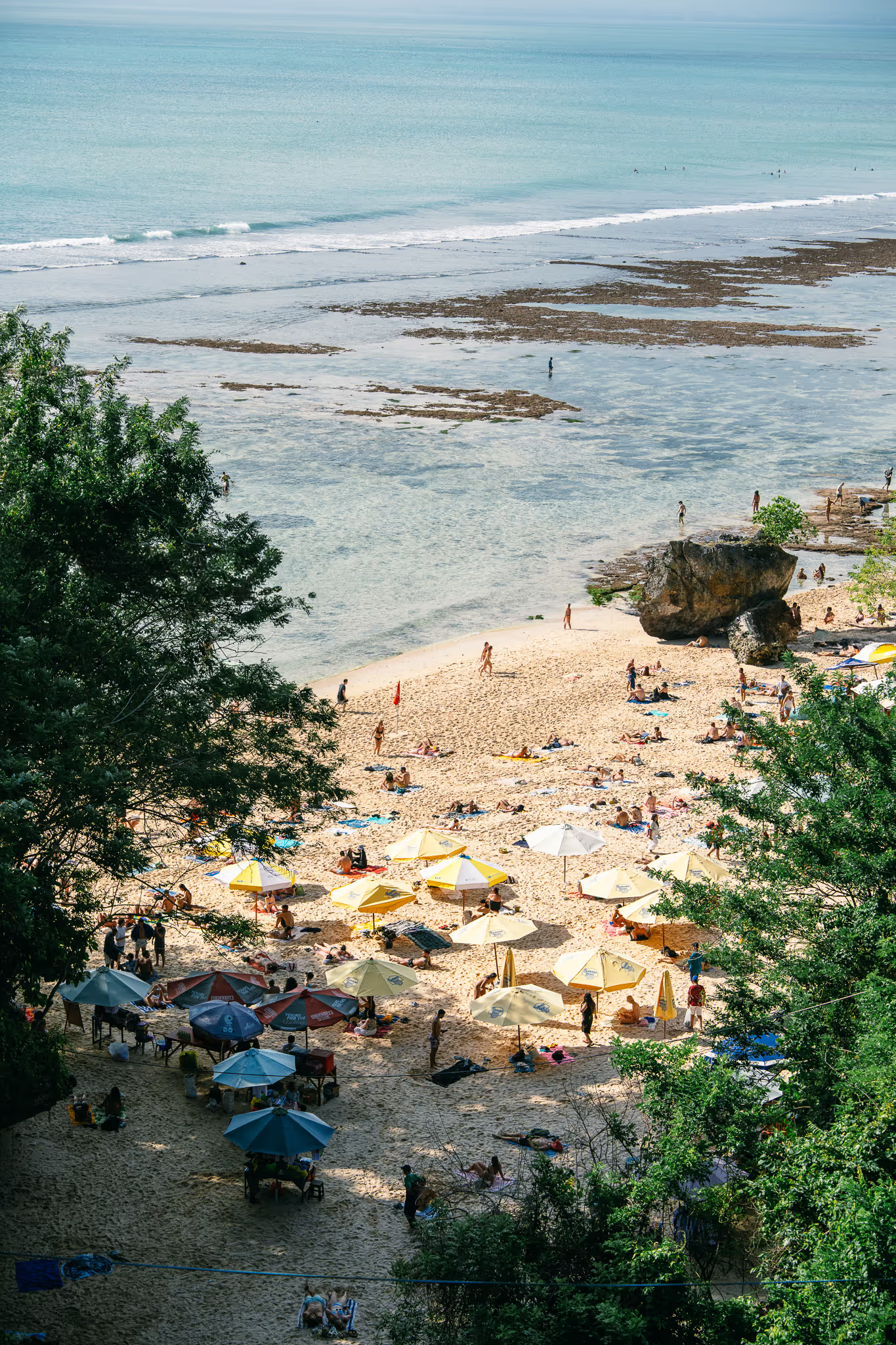
If you're still finding your feet (literally and figuratively), you'll be at mellower spots like Dreamland, Baby Padang or Thomas Beach anyway. These Uluwatu beaches are still top-notch and haven't changed one bit. They're also nowhere near the project: the works sit at the base of the cliff beneath the temple, and the beginner spots are whole bays away.
And if part of you is wondering whether coming at all is the wrong move, some kind of quiet boycott, it's the opposite. The people pushing hardest for accountability on this project are the same locals running the warungs, the camps and the surf schools. When the water went milky during construction and the lineup emptied, it was their livelihoods that took the hit. Temple visitors come for a day. Surfers stay, and surfers staying is half the argument for protecting the wave.
The magic of this place is still very much here. If anything, it's a good reminder to come experience it... and to do it the right way.
Here's where we stand on it
Uluwatu has been changing for years, from a wave you had to hike into back in 1972 to the buzzing clifftop scene it is today. Some of that change has been beautiful. Some of it has been rushed and careless.
We're not anti-change. What we don't want is change that steamrolls the culture, the reef and the waves without asking the people who live here first. Plenty of locals are pushing for better answers. From proper environmental checks to talk of a surfing reserve or sanctuary for the whole Bukit. And it's gone beyond talk: after footage showed diggers dumping cliff debris straight into the ocean, Bali's Attorney General opened an investigation in October 2024 into how the project was permitted, calling in officials from the very agencies that approved it. The findings haven't been made public, but the message landed. People here are watching, and they're not just posting about it.
Here's what we can promise, though.
Our team is made up of born-and-raised, know-every-tide locals.
Stay with us and you get a direct line to the Uluwatu of yesteryear, the stories, the spots off the main drag, the version of this place that existed long before the diggers showed up.
FAQs
Q. Is the Uluwatu wave ruined by the seawall?
No. As of 2026 the wave at Uluwatu is unchanged and still breaking the way it always has. We surf the breaks closest to the works and haven't seen a single change in the water. The concerns surfers have raised are about possible long-term effects, like backwash from the wall, not anything that's happened yet.
Q. Why is a seawall being built at Uluwatu?
To protect the cliff beneath Uluwatu Temple, where cracks have been appearing since 1992. The Indonesian government announced the roughly $5 million project in 2024, including a 25-metre seawall and a road cut into the cliff.
Q. Is the seawall finished?
Not yet. Phase one, the road and the first stretch of wall, was declared complete in April 2025. Phase two went out to tender in early 2026 and hadn't broken ground when a June 2026 swell damaged part of what's already built.
Q. Can beginners still surf in Uluwatu?
Absolutely. The main Uluwatu break is for advanced surfers, but beginner-friendly spots nearby like Dreamland, Baby Padang and Thomas Beach are completely unaffected. They're whole bays away from the works.
Q. Is it still worth visiting Uluwatu right now?
100%. The waves, the cliffs, the sunsets and the culture are all still here. Here's why Uluwatu is worth visiting.
Q. Will the seawall change the surf in the future?
Maybe, but nobody can say for sure yet. The main worry is backwash altering the swells, and that's still speculative. There's also a real question of whether the wall itself lasts, since swells have already damaged it twice. Local surfers are pushing for a proper environmental assessment before the project goes further.
More blogs you might like

FAQs
Find answers to your last-minute questions about your upcoming surf adventure with us.
Our packages include accommodation, daily surf lessons, and access to all camp facilities. We also provide surf gear for your convenience. Additional activities can be booked separately.
Travel insurance is highly recommended to cover any unexpected events. It can protect you against cancellations, medical emergencies, and lost belongings. Please check with your provider for specific coverage.
Booking is simple! Visit our Packages & Prices page to select your desired package. You can complete your reservation online or contact us for assistance.
Kala Surf Camp is located in the heart of Bali, close to the best surf spots. Our camp offers a peaceful environment while being just a short distance from vibrant local culture. You'll enjoy easy access to both surf and relaxation.
Yes, date changes can be made depending on availability. Please contact our support team as soon as possible to discuss your options. We aim to accommodate your needs whenever we can.