


Barrel Riding Guides and Top Tips: How to Get Your First Ever Barrel

.avif)
For many surfers, getting barreled is the holy grail. The Everest of surfing, if you're more inclined towards the dramatic.
It's that moment you stop simply riding waves and start riding inside the wave itself... surrounded by water and pulling warp speed with the fizz and hiss of the ocean engulfing you.
A true barrel isn't just a maneuver. It's an experience that'll reshape how you see the ocean, your board and your own abilities. But here's the thing: despite what those highlight reels suggest, riding a perfect barrel is rarely just luck.
It takes skill, preparation and a deep understanding of wave behavior, positioning and control.
This guide is for surfers who want their first barrel and want to understand what they're getting into before they commit. Whether you're aiming for smaller waves or preparing for bigger ones, understanding barrel riding before you paddle out will dramatically improve your chances (and help you stay safe).
We spoke to our most experienced surf coaches at Kala Surf. Here's how they help people get their first barrel.
What is a barrel wave and why is it so special?
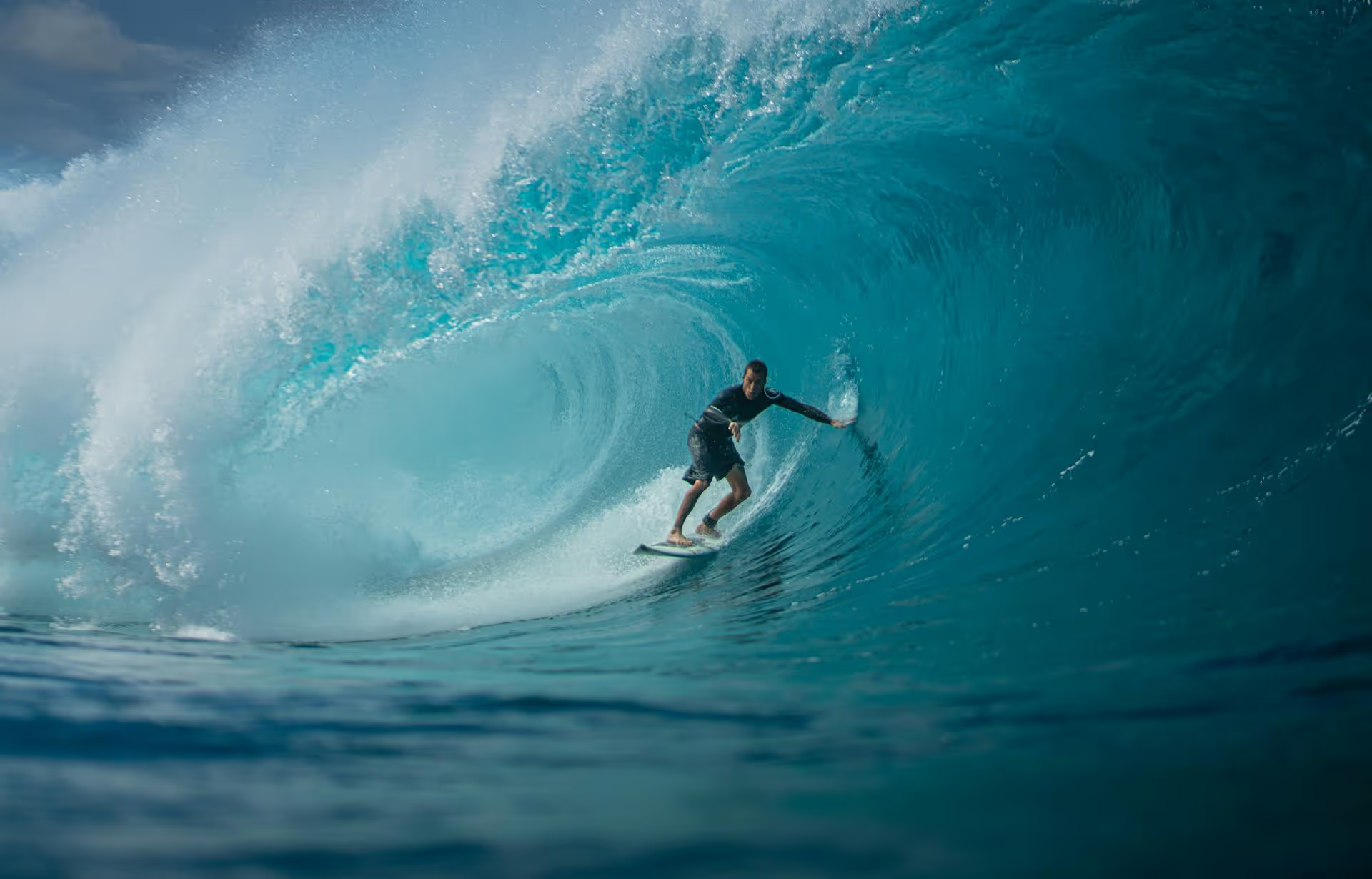
A barrel wave forms when the lip of a breaking wave throws forward and creates a hollow, cylindrical space. You might hear it called the tube, hollow tube, pit or keg (isn't surf slang fun?). When you ride through that space, you're tube riding. Fully enclosed by the wave.
Why do so many surfers chase barrels?
In short... it feels incredible. No other maneuver in surfing offers the same sensation. Time seems to slow down. Sound becomes muffled. Gravity feels different. Places like the Mentawais and Keramas are famous for their tubes. And when you're in one, you're essentially tapping into surfing in its most raw and powerful form.
That's why barrel riding is often described as surfing's highest expression. It requires skill (not brute force) and it rewards those who understand timing, balance and wave shape.
Are you ready to ride barrel waves?
Before you actively start chasing barrels, you need an honest assessment of your skill level.
You don't need to be a pro, but you do need control over your board, confidence in steep drops and the ability to read where a wave breaks.
If you're developing as a barrel surfer, you should already be comfortable with:
- Paddling into critical sections
- Angling your takeoffs
- Riding down the wave face with speed
- Maintaining balance in demanding positions
- Avoiding obstacles and other surfers
- Reading the conditions pre-paddle out
Barrels don't suffer hesitation. If your pop-up, balance or positioning is inconsistent, the wave will expose it instantly, especially over reef or shallow water, and punish you accordingly.
But this doesn't mean you should wait forever. It just means you should start with the right waves and the right mindset and know exactly how to surf a reef break properly.
Understanding wave shape, size and ideal conditions
Barrels are created by a specific combination of wave height, swell direction, wind and the underwater shape of the break.
A surfer who understands these elements will catch far more tubes than someone relying on luck. Which brings us to our next points:
- The most approachable barrels usually come from clean, well-shaped waves with plenty of raw power (think high-period swells)
- Offshore winds hold the lip open, allowing the barrel to stay hollow longer
- A consistent swell that matches the break's angle creates predictable sections
- Smaller waves (waist to chest high) can still barrel, especially on reefs or sandbars with the right contour
- These waves let you learn positioning and speed control without the danger of heavy hold-downs
- As your confidence grows, you can step up to bigger waves where timing and commitment become even more critical
- Many reef and beach breaks barrel best on low tide, when the wave feels the bottom and pitches harder
- This also means less margin for error, so knowing your break is essential.
Ready to Surf in Bali? Secure Your Spot Now!
7 key considerations to getting tubed for the first time
7. Stance: Frontside versus backside barrels
Many surfers find backside barrels more challenging than frontside ones.
Riding backside limits your vision and makes speed control more technical, relying heavily on foot placement and rail engagement. However, backside barrels can feel more controlled once you master them.
The key is staying compressed and letting the board do the work rather than forcing movements.
6. Surfboards: Choosing the right board for barrel riding
Your surfboard isn't just a fashion accessory for when you walk to the beach. It's a critical tool for control inside the barrel.
The right board will help you gain speed early, fit into the pocket and maintain balance under pressure. A board designed for barrel riding typically has:
- Enough rocker to handle a steep drop and a curved wave face
- A refined, sharp outline that grips the face of the wave
- Fins that provide plenty of hold
- A rounded or pin tail for more control and traction
Too much volume and the board won't fit. Too little and you'll struggle to paddle into the right spot. Most importantly, the board should feel familiar. When the wave is throwing over your head, you don't want to be thinking about how your board reacts.
You want instinctive control. You want it to feel like an extension of your body. Knowing the anatomy of a surfboard will ensure you pick the right weapon before paddling out.
5. Positioning: The difference between watching and riding
Here's where most surfers miss out.
Barrels reward surfers who are in the perfect position before the wave even stands up. Being a meter too wide or too deep can mean missing the section entirely or taking the lip on the head. Good positioning starts with observation.
Watch where the peak consistently throws. Watch where surfers are making it. Watch how the wave's shoulder lines up. When you're paddling for the wave, commit to the right line early. Angled takeoffs allow you to set your rail and enter the pocket smoothly.
This is where many surfers fail.
They hesitate, straighten out or fade too much, losing the sweet spot where the barrel forms. Don't be that guy or girl.
4. The takeoff: Commit, commit, commit
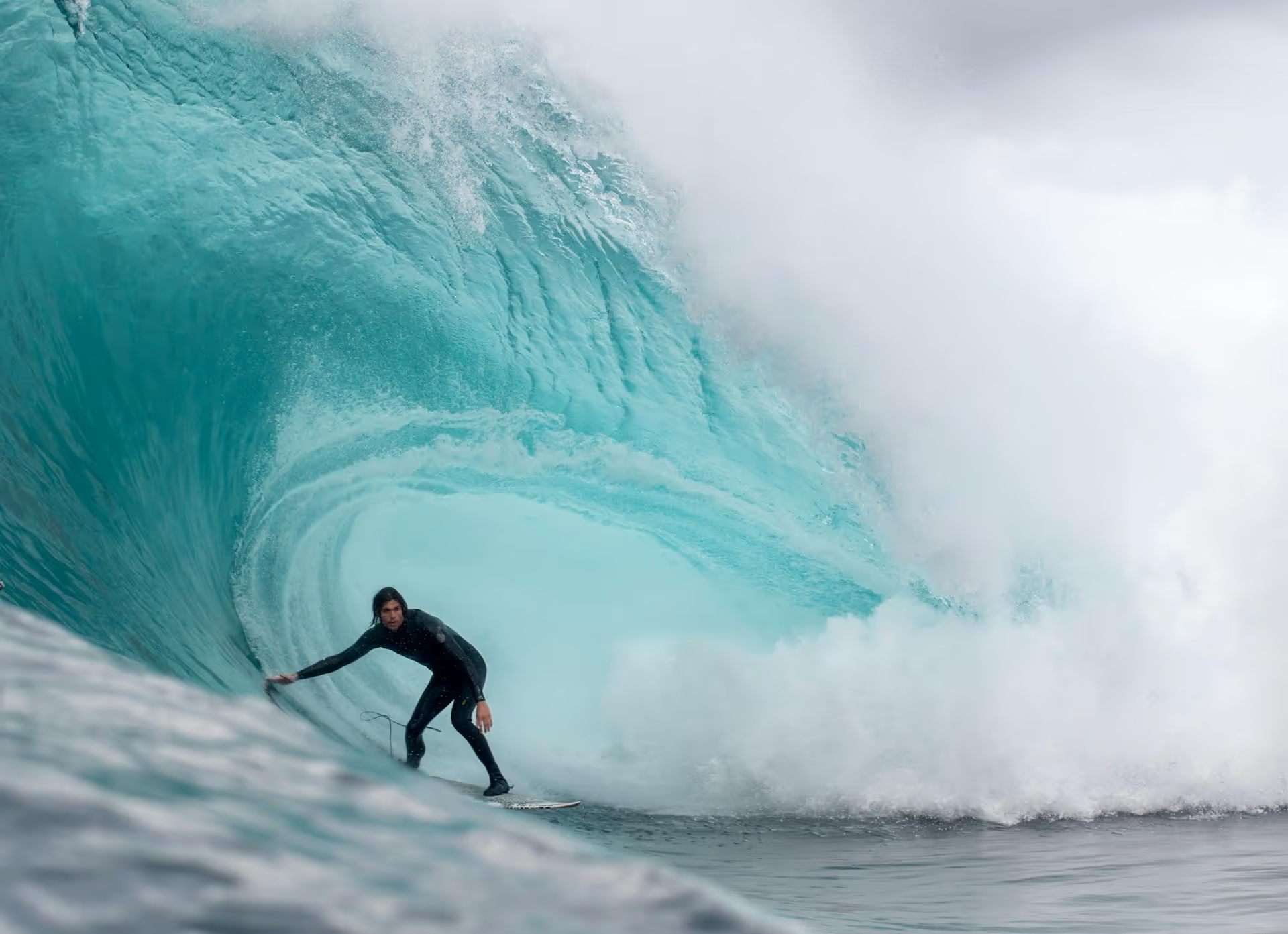
Barrel waves demand commitment. The drop is often steep and the takeoff happens close to the lip.
Once you paddle, you must go... half decisions result in wipeouts and broken boards or bodies. Staying low through the pop-up is essential. A low center of gravity improves your balance and control and keeps your board engaged with the wave. Your front foot plays a major role here, helping you manage speed and direction as gravity pulls you down the face.
From the first second, your goal isn't to turn. It's to set a clean line down the face of the wave and maintain your poise while chaos is unfolding around you.
3. Speed control: Adjusting your speed inside the barrel
One of the biggest misconceptions about barrel riding? That it's all about going fast. In reality, it's about maintaining and managing speed, not maxing it out.
If you outrun the section, the barrel collapses behind you. If you go too slow, the lip lands on your back. Adjusting speed is a constant process, using subtle shifts in weight, trim and rail engagement.
Staying high on the face helps you gain speed, while dropping slightly lower can slow you down. Some surfers lightly drag a hand or two against the face, but the best control comes from understanding how your board responds under your feet.
2. Inside the tube: Body positioning, focus and situational awareness
Once you're inside the barrel, everything becomes somehow quieter yet more intense.
Your stance should remain compact. Knees bent, chest relaxed. A low, stable posture helps you maintain balance as water moves unpredictably around you.
Your head and eyes matter more than you think. Looking down the line helps your body stay aligned with the wave's direction. Panic causes surfers to stiffen, stand tall or freeze... usually ending the ride abruptly and in spectacular fashion, we might add.
Barrel riding is about trust. Trust in your line, your board and the wave itself. Oh... and trust in all you've learned from Kala Surf too!
1. Finding the exit: Coming out of the tube (or accepting the wipeout)
Not every barrel ends with a clean exit. Sometimes the breaking wave simply closes out. And you know what? Learning to accept wipeouts is part of the progress. You can't win them all!
When an exit does appear, stay low until you see clear space. Standing too early often results in getting clipped by the lip. Let the wave release you and always stay safe, especially over reef or in shallow water.
Know when to pull out, cover your head and protect your body. At the end of the day, a little bit of vision on an unmakeable wave is better than no vision at all!
It's about time you got barreled, right?
Your first barrel may last half a second, but it'll stay with you for life.
It marks a shift... from riding waves to understanding them on a deeper, more profound level. Barrel riding isn't about ego or bravado. It's about timing, respect and a deep understanding of the ocean.
Many surfers chase barrels their entire lives because no two are ever the same. Each wave offers a new lesson in balance, control and humility. With practice, patience and the right conditions, you'll find yourself deeper, calmer and more connected: to the wave, the ocean and the reason you started surfing in the first place.
And the best part? Indonesia is the best place to get your first barrel. Talk to our surf coaches about your goals and we'll promise to get you there.
More blogs you might like
FAQs
Find answers to your last-minute questions about your upcoming surf adventure with us.
Our packages include accommodation, daily surf lessons, and access to all camp facilities. We also provide surf gear for your convenience. Additional activities can be booked separately.
Travel insurance is highly recommended to cover any unexpected events. It can protect you against cancellations, medical emergencies, and lost belongings. Please check with your provider for specific coverage.
Booking is simple! Visit our Packages & Prices page to select your desired package. You can complete your reservation online or contact us for assistance.
Kala Surf Camp is located in the heart of Bali, close to the best surf spots. Our camp offers a peaceful environment while being just a short distance from vibrant local culture. You'll enjoy easy access to both surf and relaxation.
Yes, date changes can be made depending on availability. Please contact our support team as soon as possible to discuss your options. We aim to accommodate your needs whenever we can.