


How to Choose the Right Fins for Your Surfboard (Material, Flex, Size and Shape)

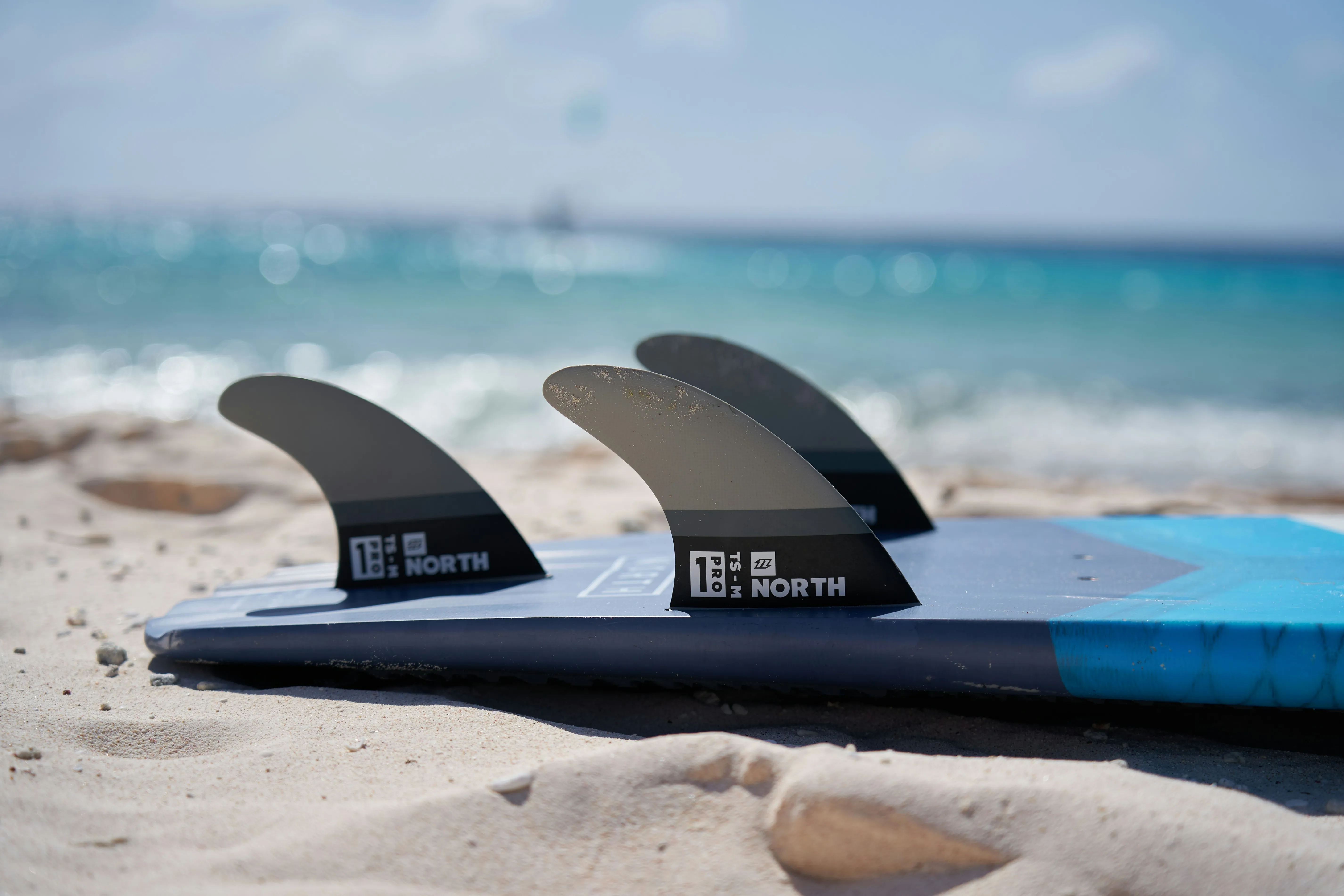
You've got a board. You've got waves. Now someone tells you fins matter too.
And they do. A lot, actually.
The right fins can completely transform how a board surfs. The wrong ones can make a great board feel dead and unresponsive. And with so many options on the shelves, it's easy to just grab whatever looks good and hope for the best.
This guide cuts through the noise.
We'll walk you through the four main things to think about when choosing fins: material, flex, size and shape. By the end you'll know exactly what to look for and why.
(Already sorted on your setup? Check out our guide to surfboard fin setups to decide whether to run a thruster, quad, twin or something else entirely.)
FCS II vs Futures: Which fin system does your surfboard use?
Before anything else, you need to know which fin system your board uses.
There are two main ones: FCS II and Futures.
- FCS II fins: Fit into two grooves in each box. Screws are optional
- Futures: These fins slide into a single slot. A screw is necessary
They are not interchangeable, so buying the wrong type means they simply won't fit.
Check the boxes on your board before you buy anything. If you're not sure, ask our team or take a photo of the boxes and look them up. It's a simple check that saves a lot of headaches (and wasted cash!).
Trust us, almost every surfer has done it. We regularly see guests at Kala buy a brand-new board only to realise they don't have the right fins for it. Don't stress, it's all part of the learning process and a rite of passage for most surfers.
How fin materials affect your surfing
Material is the most misunderstood part of the whole fin conversation. We’re gonna admit something… we also undervalue it sometimes.
It's also where the biggest performance difference comes from (besides fin shape) and one of the biggest determiners whether you’re gonna have an epic surf or an average one.
Here's a straightforward breakdown of what's out there.
Plastic fins
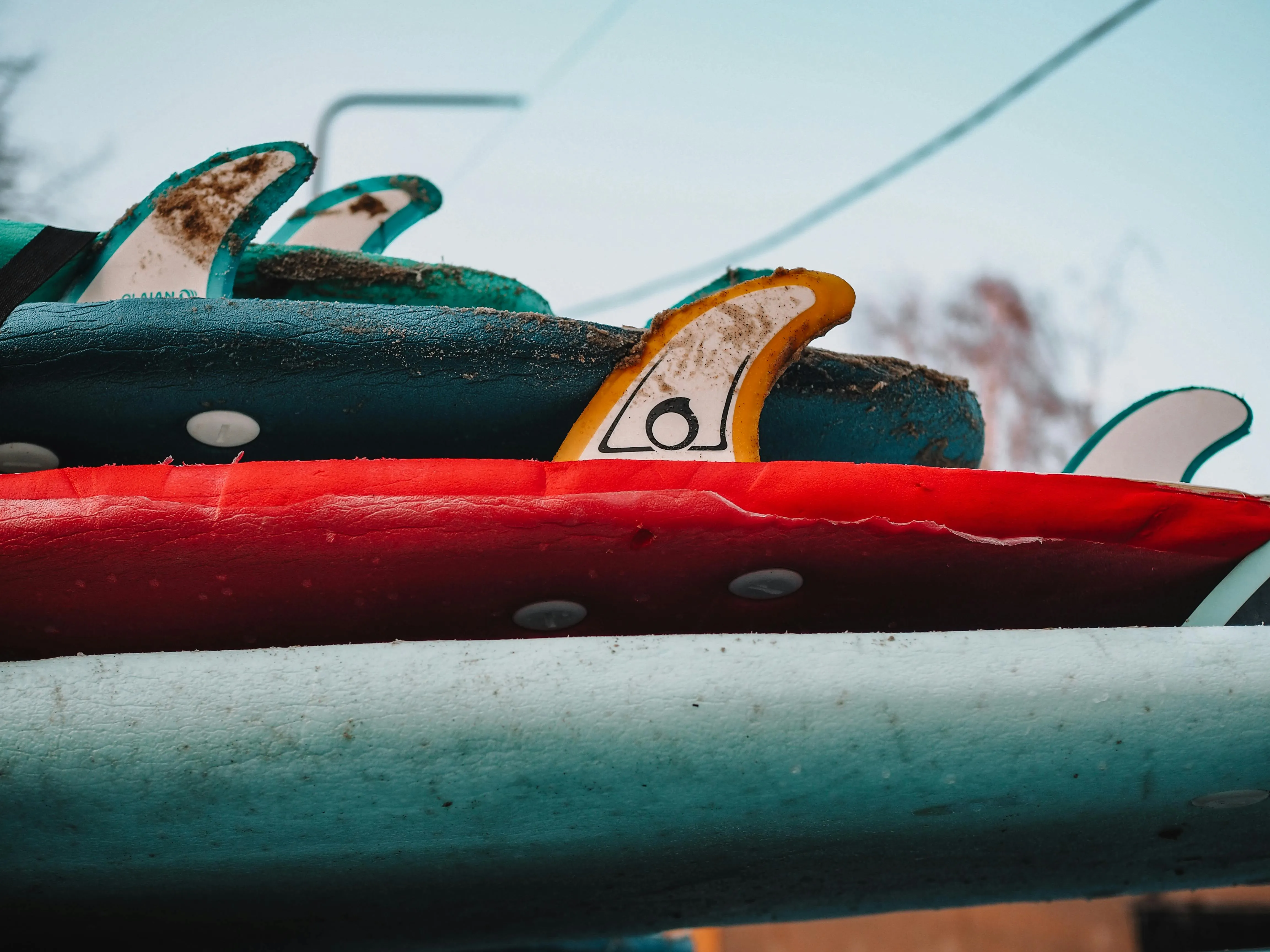
Plastic fins are what come stock on most beginner foam boards. They're cheap, flexible and basically indestructible, which makes them perfect for learning.
The downside is that they flex too much. When you push through a turn, a plastic fin bends but doesn't return that energy to the board. You lose power and feel. Fine for your first few sessions. Not great once you start ripping.
Fibreglass fins
Fibreglass fins are the sweet spot for most surfers. They have a controlled flex that loads up through a turn and then releases, giving the board a lively, responsive feel. Predictable. Durable. Works in a wide range of conditions.
If you've been surfing more than a year and are still riding stock plastic fins, switching to fibreglass is one of the most noticeable upgrades you can make. Same board, completely different feeling. Kinda like a glow up for your surfing.
Honeycomb and composite fins
Honeycomb fins use a lightweight core wrapped in fibreglass and resin.
The result is a fin that's lighter than solid fibreglass but with a similar flex pattern. The reduced weight helps with speed and drive, especially on bigger fins where solid fibreglass would start to feel heavy.
These are a great all-around choice for intermediate and advanced surfers who want performance without the price tag of full carbon.
Carbon fibre fins
Carbon fins are the high end of the market. Very stiff, very light and very responsive.
They're built for surfers who push hard in powerful waves and can actually feel the difference.
If you're still working on your pop-up, carbon fins are not going to help you. But if you're surfing confidently and want more precision and snap through critical turns, they're worth exploring. The trade-off is that carbon fins can be brittle due to reef impacts and they cost considerably more than the alternatives. Price is definitely a factor worth considering here.
How fin flex affects your surfing
Flex is how much the fin bends when you apply pressure through a turn and how quickly it springs back.
Think of it like a diving board. A stiffer board gives you a sharp, precise bounce. A flexy one gives you more movement but less control over where the energy goes.
Stiffer fins
- More control and hold at speed
- Better suited to powerful, overhead waves where you want precision and the fin to stay locked in during critical sections
- Stiffer fins suit more powerful surfers and bigger conditions
Flexy fins
- More movement and feel, especially in weaker, softer waves where you need to generate your own speed
- Flexy fins help propel you through turns and can make a board feel more alive on small days
The balance
- Most surfers land somewhere in the middle
- A fin with a stiff base for drive and a bit of flex through the tip is the most versatile option and what most fibreglass and honeycomb fins are designed to deliver
- As a general rule: the more powerful the waves you're surfing, the stiffer the fins you want. The weaker the surf, the more flex helps
How to choose the right fin size for your surfboard
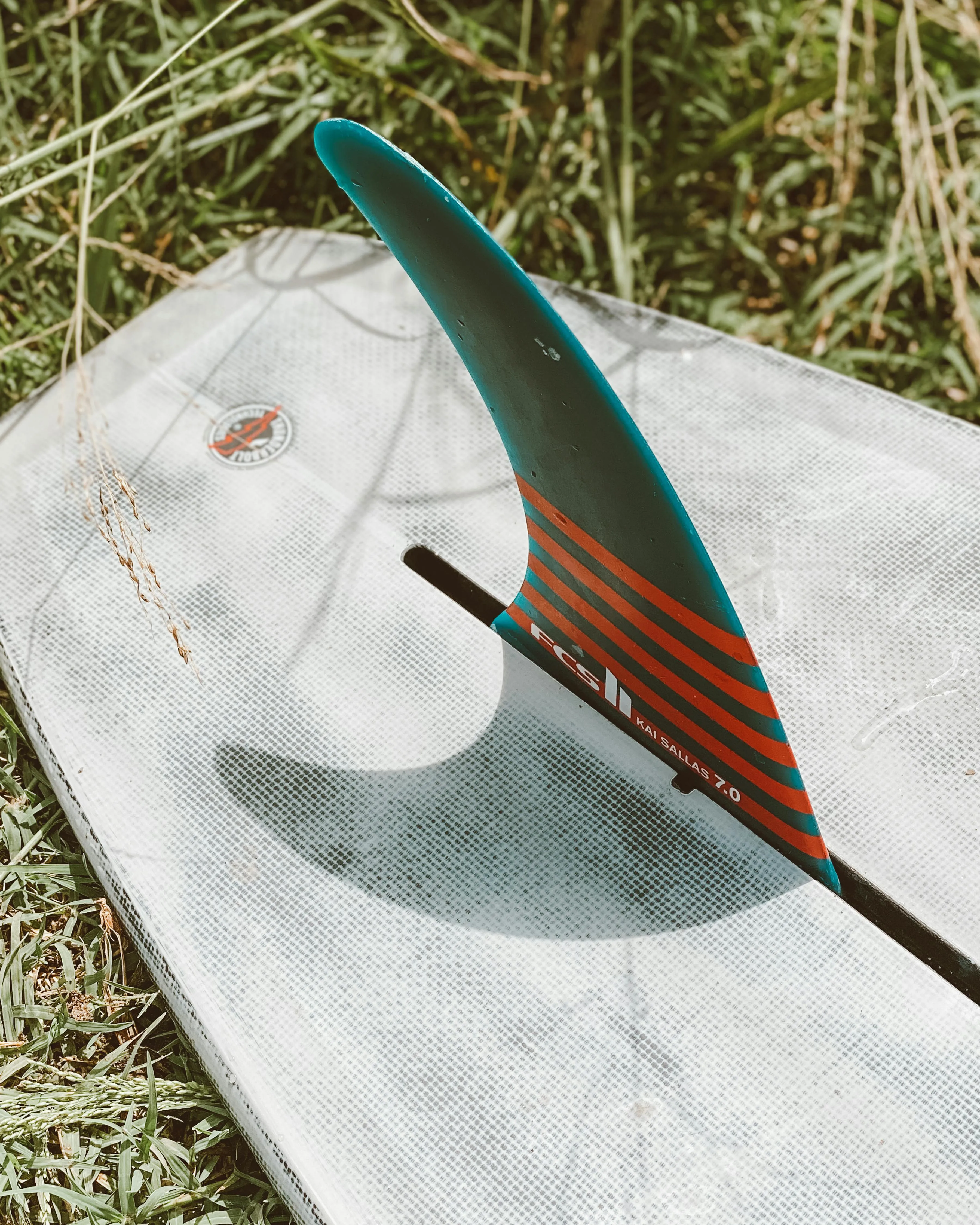
Get your fin size wrong and even the best fins in the world will feel suss. Fortunately, sizing is pretty straightforward once you know the basics.
Weight is the starting point
Both FCS and Futures publish weight-based sizing guides. They're not exact science, but they're a solid starting point.
FCS II sizing:
- XS: under 54kg
- S: 54–65kg
- M: 65–80kg
- L: 80–90kg
- XL: 90kg and above
Futures sizing:
- XS: 34–52kg
- S: 48–70kg
- M: 66–88kg
- L: 82kg and above
Surfing style matters too
If you surf with a lot of power and drive hard through turns (most likely not a beginner), you can go up a size from where your weight lands.
If you prefer a lighter, more forgiving feel, staying at or going down a size keeps things loose and responsive (beginners… listen up!).
Bigger fins vs smaller fins
- Bigger fins: more hold, more stability, better suited to powerful waves and heavier surfers
- Smaller fins: looser feel, quicker release through turns, suits lighter surfers and smaller waves
Ready to Surf in Bali? Secure Your Spot Now!
How fin shape affects your surfing
Shape is where things get a bit more nuanced but it's also where you can really fine-tune how a board surfs. There are three main things to understand: base, height and rake.
Base
The base is the width of the fin where it attaches to the board. A longer base means more drive and acceleration out of turns. A shorter base makes the board feel more pivoty and loose.
Height
A taller fin sits deeper in the water and gives you more hold and stability. A shorter fin reduces drag and gives you a freer, lighter feeling. Taller fins suit powerful waves and bigger surfers. Shorter fins work well for smaller surf and lighter surfers who want a looser ride.
Rake (sweep)
Rake refers to how far the fin curves back from the base. More rake means longer, more drawn-out turns and better projection down the line. Less rake means a more upright fin, which pivots quickly and suits tighter, snappier turns.
As a rule of thumb: more rake works better in long, fast waves like point breaks. Less rake suits beach break conditions where you want to change direction quickly.
Understanding surfboard fin foil
Now this is where things get a bit techy: foil.
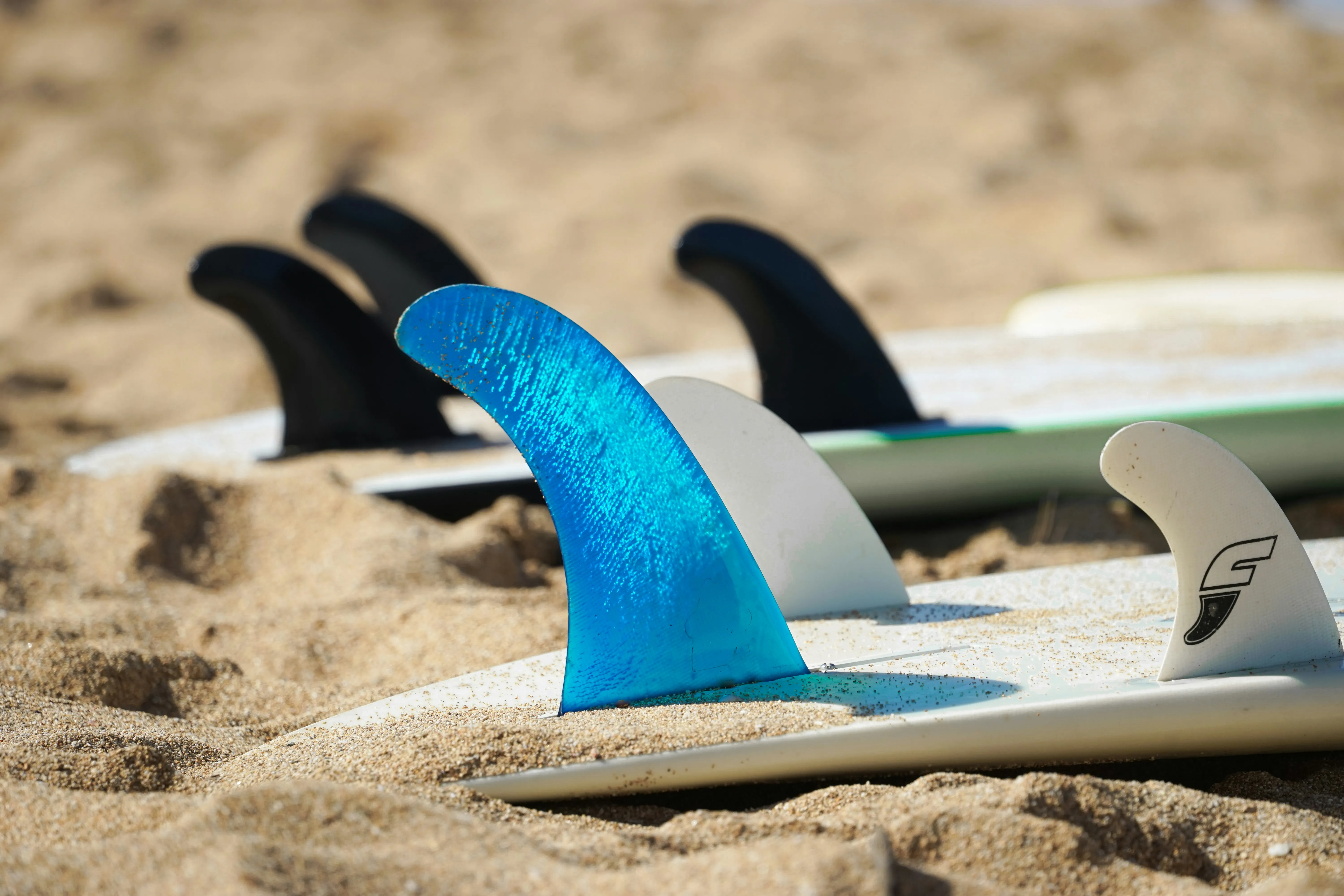
Foil is the cross-section shape of the fin. Basically how it's been sculpted on either side. It affects how water moves across the fin and in turn how much lift and drive the fin generates.
Most side fins in a thruster have a slightly concave inside face. This helps the water flow across the fin more efficiently, adding drive and speed through turns. The centre fin is usually symmetrical on both sides for directional stability.
You don't need to overthink foil, especially as a beginner. But it's worth knowing it exists, because when you start to notice the difference between fins, it's often foil doing a lot of the work.
How to choose your first set of surfboard fins
If you're newer to surfing, keep it simple.
Get yourself a set of fibreglass fins in the right size for your weight. Buy secondhand and keep it as cheap as possible. Fins are pretty expensive these days.
If you're in Bali, you're in luck. There are always secondhand fins floating around Facebook. We'd recommend checking groups such as Bali Surfing Community, Uluwatu Surfboards Buy Sell, and Bali Surfing Community: Buy and Sell. It's a great way to pick up quality fibreglass fins for a fraction of retail price and maybe even score your next board while you're at it.
Run a thruster setup and focus on control and predictability over any other sensation. Once you're surfing with more confidence and starting to feel the difference between sessions, that's when experimenting with shape, flex and materials starts to make sense.
If you've been surfing for a while and feel like your board is holding you back, the fins are often the first thing worth looking at.
A fin change can genuinely transform a board you'd otherwise sell. We've had boards that went like driftwood, only to switch out the fins and suddenly realise it wasn't the board after all.
The best way to learn what works for you is to try things. Swap fins with a friend, experiment between sessions, borrow from our team and pay attention to how the board feels. Trust what you notice.
Our coaches at Kala are always happy to talk fins. Whether you're just getting started or trying to dial in a board that isn't clicking, it's one of the conversations we enjoy most.
(If you're still figuring out which board to pair with your fins, our guide on how to choose the best surfboard for your level is a good place to start.)
FAQ
Q. What fins should a beginner surfer use?
Stick with a thruster setup in medium to large fibreglass fins, depending on your weight. Most fin manufacturers publish sizing guides, so use those as your starting point and don't be afraid to size up slightly if you're unsure. Avoid cheap plastic fins once you're past the early learning stages, as they wash out too easily and don't give you an accurate feel for how your board is designed to surf.
Q. What is the difference between FCS and Futures fins?
FCS II fins fit into two-groove boxes. Futures fins fit into a single-slot box. They are not compatible with each other. Always, always check which system your board uses before buying fins. We see Kala guests accidentally make this mistake all the time, especially after buying a brand-new board and getting excited about upgrading their fins. Don't stress though, it's a rite of passage for most surfers and all part of the learning process.
Q. Do more expensive fins actually make a difference?
Nope… especially for beginners. Focus on correct sizing and a basic fibreglass construction. For intermediate and advanced surfers who can feel subtle differences in how a board responds, yes, better fins can make a meaningful difference, particularly in the way flex and drive behave through turns.
Q. What does fin flex do?
Flex affects how the fin loads and releases energy through turns. A fin with the right amount of flex for your surfing style will spring back as you come out of a turn, giving the board a boost of speed. Too stiff and you lose that energy return. Too soft and the fin washes out. In plain English, fin flex affects how quickly and smoothly you come into and out of turns.
Q. Can I use any fins on any board?
As long as the fin system matches (FCS II or Futures) and the setup matches (thruster, quad, twin, etc.), yes. Size your fins to your weight and the conditions, not just to what looks good on the shelf.
Q. Should I mix different fins in the same setup?
It can work well, especially in a thruster where you might run a stiffer centre fin with slightly softer side fins to get a particular feel. Most beginners and intermediates are better off starting with a matched set and experimenting from there once they know what they're looking for.
Q. What about longboard and single fins?
Completely different fin system. No need to worry too much about that unless you plan on becoming a longboarder. If that’s you, just know that true longboards are single fins with a box, screw, plate and bolt that secures the fin.
Q. What fins do professional surfers use?
Most professional surfers ride fins matched to their weight, surfing style and conditions. Many pros work closely with fin brands such as FCS, Futures and Captain Fin to develop signature templates. While it's tempting to copy your favourite surfer's setup, most surfers are better off starting with a neutral medium or large template and adjusting from there.
Q. Do surfboard fins make a big difference?
Absolutely. Changing fins can make a surfboard feel faster, looser, stiffer, more drivey or more predictable. Many surfers spend thousands on new boards but overlook fins, even though they're often one of the cheapest and most noticeable performance upgrades you can make.
Q. How often should I replace my fins?
Fibreglass fins can last for years if looked after. Replace fins if they become chipped, cracked, delaminated or significantly worn from reef impacts.
That said, in our experience around Uluwatu, low tides and sharp reefs can be pretty unforgiving. If you're surfing three or four times a week, it's not uncommon to need a new set of fins every six months or so after repeatedly clipping the reef or knocking a fin loose. Consider it part of the cost of surfing one of the best waves in the world.
Final word
Fins are not the most glamorous part of surfing. Nobody paddles out thinking about base widths and rake angles.
But getting them right can transform your relationship with your board and your surfing. A well-chosen set of fins will make your board feel more alive, more responsive and more fun.
Start simple. Size correctly. Choose fibreglass. And when you're ready to go deeper, come on down the rabbit hole. Nerding out on fins is one of our team’s fav pastimes.
More blogs you might like


FAQs
Find answers to your last-minute questions about your upcoming surf adventure with us.
Our packages include accommodation, daily surf lessons, and access to all camp facilities. We also provide surf gear for your convenience. Additional activities can be booked separately.
Travel insurance is highly recommended to cover any unexpected events. It can protect you against cancellations, medical emergencies, and lost belongings. Please check with your provider for specific coverage.
Booking is simple! Visit our Packages & Prices page to select your desired package. You can complete your reservation online or contact us for assistance.
Kala Surf Camp is located in the heart of Bali, close to the best surf spots. Our camp offers a peaceful environment while being just a short distance from vibrant local culture. You'll enjoy easy access to both surf and relaxation.
Yes, date changes can be made depending on availability. Please contact our support team as soon as possible to discuss your options. We aim to accommodate your needs whenever we can.