


What Is the Best Tide for Surfing?


Ever rocked up to the beach frothing for a wave, only to find it fat and slow? Or worse... closing out over shallow reef?
Yep... that's all because of the tides.
So what's the best tide for surfing? There isn't one. Not universally. Every break has its own window, and the same stretch of reef can go from perfect to unsurfable on the same swell, just a couple of hours apart.
We coach in Uluwatu, so this isn't theoretical for us. We would never take a beginner out at Uluwatu on a dead low tide. There isn't enough water on the reef, the wave stops peeling and starts barreling, and what's underneath it is razor-sharp coral. Same wave, same swell, four hours later: a completely different call.
Below is what the tide actually does to a wave, and how to work out which one your spot wants.
What are tides?
Tides are the slow daily rise and fall of the ocean, caused mainly by the gravitational pull of the moon on the sea.
The sun has some influence, for sure, but the Moon does most of the work, tugging the water into bulges as the Earth spins beneath them. The sun's tide-generating pull is a bit under half the moon's, which is why the two of them lining up matters later on. This is how tides are relevant to surfing:
- Most coastlines around the world get roughly two high tides and two low tides each day
- The sea level rises and falls over a cycle of about 6 to 6.5 hours between each high and low
- The timing shifts about 50 minutes later each day. A tide that's perfect at 7 AM today will be closer to 7:50 AM tomorrow
That last point is a goodie. When you can't remember what the tides are doing today but you know what they did yesterday, you can wager a decent guess. Our advice though? Check the tide tables and a surf forecast before you head out.
Want to learn how to read a surf forecast like a pro?
How do tides affect waves?
The tide changes the waves you'll be surfing by changing the water levels over the reef or sandbars where the wave breaks. The depth of that water helps determine whether a wave breaks well and gives a great ride or breaks badly.
Worth separating two things that get muddled here. Waves are made by wind, blowing across the ocean surface, sometimes thousands of kilometres away. Tides are made by gravity. They're completely different forces. The tide doesn't make your waves, it decides what those waves do when they arrive.
When a swell moves from deep ocean into shallow water near the shore, it slows down, stands tall and eventually pitches over to form a breaking wave. As a rough rule, a wave breaks when the water gets to about 1.3 times its own height, so a one metre wave wants roughly 1.3 metres beneath it to start throwing. Add or remove a metre of water with the tide and you completely change how, where and with how much force that happens.
Which is why the takeoff spot physically moves through the day. On a lower tide the wave finds its breaking depth further out, so the peak shifts and the lineup shuffles with it. Sit where you sat yesterday morning and you'll be in the wrong place.
That, honestly, is a lot of what you're paying for when you book lessons. Not someone shouting "paddle" behind you. You're paying for a coach who already knows where to sit at that tide, on that swell, today. Working it out on your own means hundreds of hours and hundreds of sessions at one break before you stop guessing.
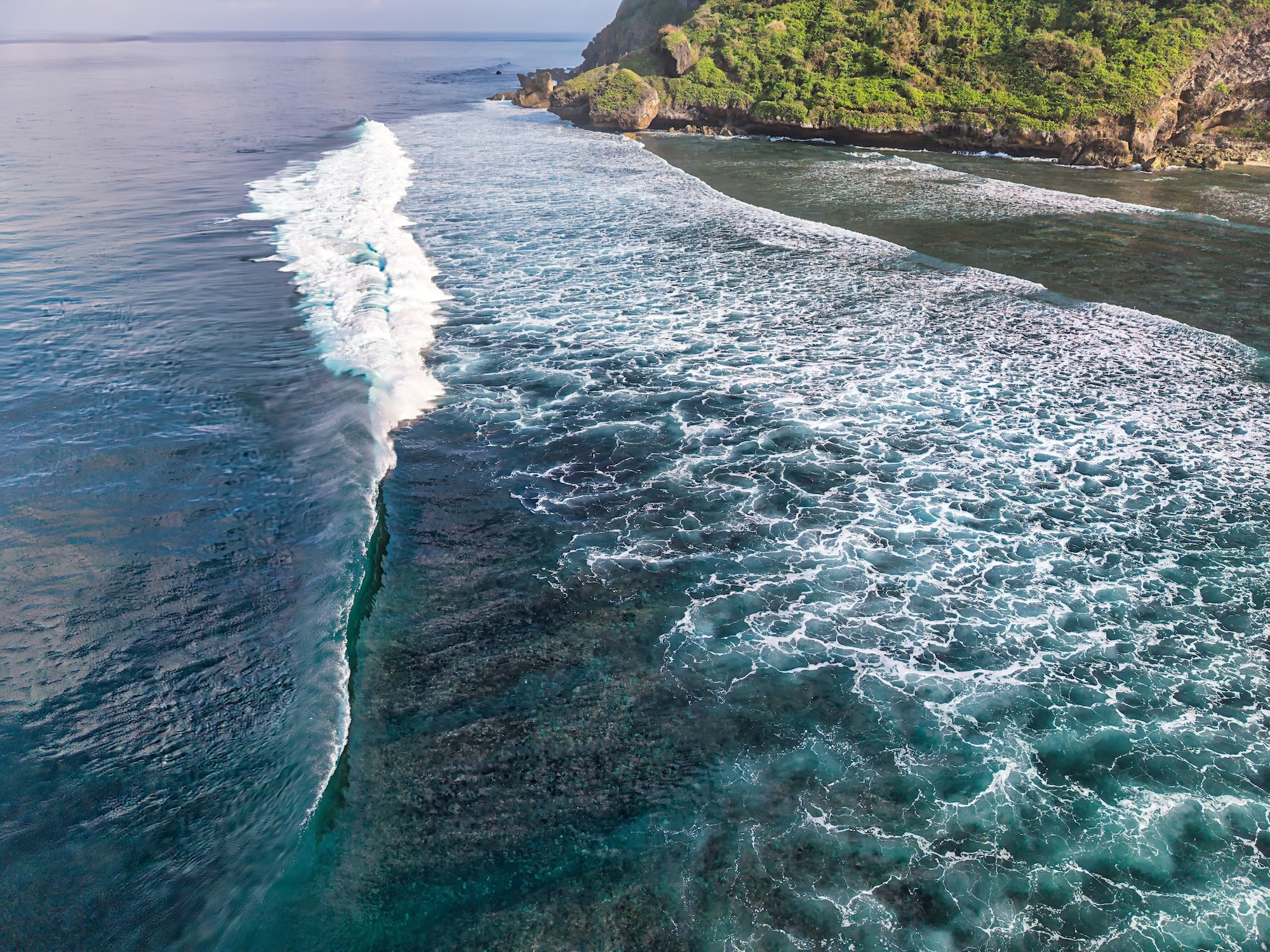
Is high tide or low tide better for surfing?
Surfing at low tide
- This equates to less water over the break
- With a shallow bottom, waves tend to jack up faster and steeper and start breaking further out, because the wave hits that 1.3 times depth mark sooner
- This can make them hollow and punchy... but it can also cause them to close out (break all at once instead of peeling) and expose rock or reef
- On the shallow reefs around Bali, a dead low can turn a fun wave into a sketchy one reeeeal quick
Surfing at high tide
- This means more water over the break
- Waves are usually fuller and softer
- They're less likely to close out because there's more water to hold their shape
- The catch? Too much water and some spots go fat and slow with no energy to push you
- At spots with a cliff or a wall behind them, a big high tide can also throw water back out at the incoming swell. That backwash bounces up through the face and makes an otherwise clean wave lumpy and awkward to ride
Are waves actually bigger at high tide?
No. The tide doesn't change the swell. The size of the waves arriving at the reef is set by wind out in the ocean, sometimes days earlier and thousands of kilometres away, and no amount of tide movement adds to it.
What the tide changes is how that swell stands up when it arrives. A low tide can make the same swell look bigger, because the wave jacks and throws instead of rolling through. A high tide can make it look smaller for the same reason in reverse. The wave is the same size. It's just doing something different when it gets there.
What about mid tide?
Mid tide is where a lot of breaks are at their best, and it's the answer the "high or low" question usually has. Enough water to hold shape, not so much that the wave goes soft. If you only remember one thing from this article, make it that the interesting stuff often happens between the two extremes rather than at either end.
Dreamland is the clearest example we've got on the Bukit. It just doesn't break unless you're within an hour either side of dead low. Show up outside that two hour window and there's nothing to surf. The exception is a double overhead swell, and then it works right through the tide, high included.
None of the three is the best tide across the board. Every local break has its own preference. The skill is knowing which is which.
Incoming vs outgoing tide
Time to take your Tides IQ up a notch! Because in addition to how high or low the tide is, it's also important to note the direction it's moving too.
Incoming tide
- An incoming tide is water pushing in toward the shoreline
- Most surfers prefer it, and the clearest reason is what isn't happening. There's no draining current running out against the incoming swell
- The water over the reef is getting deeper rather than shallower, so a spot that's marginal when you paddle out keeps improving while you're sitting there instead of shutting down under you
Outgoing tide
- An outgoing tide (also called a dropping tide) is water draining back out
- This can make surf conditions more inconsistent and rippy and hard to ride
- On reef spots that draining water has to go somewhere, and it runs off the reef and out through the channel. That's why rips get noticeably stronger on a dropping tide, and why the face can go bumpy as water moves out under the swell coming in
As a rough rule that works at loads of waves, a mid tide rising toward high, plus a couple of hours around high tide, is often the safest bet for fun, forgiving waves. It's a great default when you're not sure.
Ready to Surf in Bali? Secure Your Spot Now!
Spring tides vs neap tides (the moon phase thing)
This is maybe not super relevant to your average Joe and Jane beginner surfer, but it's good to know nonetheless.
Spring tides
- These happen around the full moon and new moon, when the sun and moon line up and their gravity pulls together
- You get a bigger tidal range, higher highs and lower lows, sometimes verging on extreme tides
- The water also moves faster, so the good window at each spot can be shorter
- The lows are lower, which is the part that matters on the Bukit. Shallow reef that's merely shallow on a normal low can be genuinely dangerous on a spring low
Neap tides
- Neap tides happen around the half moons (the moon's quarter phases), when the sun and moon pull at right angles and partly cancel out
- The range is smaller, the water moves less
- Less movement cuts both ways. A spot that's working stays working for longer, but a spot that needs a specific tide to switch on might never quite get there, because the low isn't low enough or the high isn't high enough
The whole cycle runs about a month, swinging between big spring tides and calmer neaps roughly every two weeks.
King Tides
King tides are the biggest spring tides of the year. Not a separate thing, and not a scientific term either, just the nickname that stuck for the extremes. They happen when a full or new moon lines up with the moon at its closest point to Earth, which works out to a few times a year rather than a few times a month.
For surfers the interesting half isn't the high. It's the low. A king tide delivers the lowest lows on the calendar, which around the Bukit means reef that's normally under water sitting dry. Spots that need water to work won't get it, getting in and out changes, and anywhere that's already sketchy on a normal low is worse on this one.
Worth checking the calendar if you're planning a trip around a specific wave. It's a handful of days a year, not something to build a whole trip around.
Tides don't work alone
Tides are a big factor, but they're one piece of the puzzle. To read the ocean like a prepared surfer, you factor in a few things at once:
- Swell: The size, direction and period of the swell. Swells with long periods (waves that have travelled a long way from distant storms) pack more energy and can make a spot work on a tide it normally wouldn't. Dreamland on a double overhead day is exactly this. Enough swell and the tide rule bends
- Wind: Light or offshore wind grooms clean waves, while strong winds and onshore wind chop them to bits. This is half the reason the Bukit works the way it does. Through the dry season the trades blow from the southeast, which is offshore on the west facing side of the peninsula, so Uluwatu, Padang, Bingin and Dreamland all sit on the sheltered side of the hill.
- Weather and season: Weather conditions and seasonal swell patterns shape what's on offer through the year, so the best waves at a spot come and go with the calendar
The takeaway: Tides matter, but they always combine with swell and wind to create the final wave conditions.
Why tides matter even more over reef
If you're used to beach breaks back home, whether that's San Diego or Hossegor or the Gold Coast or another local spot, Bali will teach you to respect the tides quickly because most of the classic waves here break over reef.
Over sand, a bad-tide closeout just means a clumsy wipeout. Over shallow reef at low tide, it can mean cuts and dings, so here the tide isn't only about wave quality... it's a safety call too.
This is why the tide can rule out a wave for you that's perfectly fine for someone else on the same day. The reef doesn't care how you're going, and the consequence of a bad wave selection scales with how much water is over it. It's also why a spot you surfed happily last week can be off the table this week on the same swell.
Around the Bukit, you'll quickly notice each wave has its own tide. Dreamland wants its two hours around dead low. Others need plenty of water to work at all. A few close out or get dangerous at the wrong stage. That's not something to memorise from an article. It's exactly the local knowledge our coaches or guides give you in your first session.
How to actually use tides
You don't need a science degree. You need a simple habit that turns the tide to your advantage:
- Check the tide tables and surf forecast before you plan your session
- Match the tide to the spot. Ask a local, a coach or our surf camp which tide suits the wave you want to surf. Every spot has a slight variation
- Factor in the swell and wind. A bigger swell can make a wave work on a tide it normally wouldn't and wind can undo a perfect tide. They all work together
- Watch and learn. Sit and watch a spot change over the course of a few hours, from low to high, ideally at dawn or into sunset (with a cold drink in hand). Once you've seen it shift with your own eyes, it's easier to decode
How to read a tide chart without overthinking it
Two things matter on the chart and everyone looks at the wrong one. The word "low" tells you nothing. The number next to it tells you everything. Tide height is given in metres, and a 0.9m low and a 0.2m low are completely different days on the same reef.
So read the height, not the label. Then check which way it's heading, because a 1.0m reading on the way up and a 1.0m reading on the way down are the same depth doing opposite things to the wave.
The trick for anyone here more than a few days
Tides shift about 50 minutes later each day, which sounds trivial until you do the arithmetic on a week. Seven days is close to six hours, roughly half a full cycle.
In practice that means if dawn is dead low on your first morning, by the end of the week dawn is close to high. The spot that was firing when you arrived might be flat at the same hour on your last day, and the one you wrote off on day one comes good. Nothing changed except when you showed up.
Do this a few times and reading the tide stops being a chore. It becomes second nature… part of how you sniff out the best wave of the day.
FAQs
Q. Is high tide good for surfing?
Often, yes, and it's the safer default of the two if you don't know a spot. More water over the reef means a fuller, softer wave that's less likely to close out or put you on the bottom. The catch is that some spots drown at high tide and go slow and gutless. Where it goes wrong is assuming high tide is universally good, when plenty of waves need a lower tide to have any shape at all.
Q. What tide is best for beginners?
Generally a higher, incoming tide at a mellow beach or sand-bottom break. There's more water over the bottom, the waves are softer and more forgiving and there's far less risk of hitting shallow reef. Around the Bukit that also rules some spots out entirely. We wouldn't put a beginner at Uluwatu on a dead low no matter how good it looks from the cliff.
Q. Why do the best waves happen at a different time each day?
Because the tide cycle shifts about 50 minutes later every day. Yesterday's perfect tide time won't be today's, which is why you always check fresh tide tables. Over a week that adds up to roughly six hours, so the session that was firing at dawn when you arrived is a dead low afternoon by the time you leave.
Q. What's the difference between spring and neap tides?
Spring tides (around the full and new moon) have a bigger range, so higher highs, lower lows, and faster moving water. Neap tides (around the half moons) have a smaller range and the water barely moves by comparison. They alternate roughly every two weeks. Neither changes the size of the swell arriving, only how much water is sitting over the reef when it gets there.
Q. Does an incoming tide really make waves better?
Often, yes. The clearest reason is what an incoming tide isn't doing. There's no current draining off the reef and running out against the swell, which is what makes a dropping tide feel rippy and disorganised. The water is also getting deeper while you're out, so a marginal spot improves rather than shutting down under you. It's not a hard rule, but it's a solid starting assumption.
Ready to learn the tides on real Bali waves?
The fastest way to understand tides is to surf a spot every day and watch it change with a coach who already knows its moods. Which is why learning with a surf camp (wink wink, nudge nudge) is the way to go.
Want to stop guessing and start reading the ocean like a local?
Come surf with us in Uluwatu! The Bukit Peninsula has a spot working on almost every tide and our local coaches will teach you exactly which wave to surf and when. See you in the lineup.
More blogs you might like
FAQs
Find answers to your last-minute questions about your upcoming surf adventure with us.
Our packages include accommodation, daily surf lessons, and access to all camp facilities. We also provide surf gear for your convenience. Additional activities can be booked separately.
Travel insurance is highly recommended to cover any unexpected events. It can protect you against cancellations, medical emergencies, and lost belongings. Please check with your provider for specific coverage.
Booking is simple! Visit our Packages & Prices page to select your desired package. You can complete your reservation online or contact us for assistance.
Kala Surf Camp is located in the heart of Bali, close to the best surf spots. Our camp offers a peaceful environment while being just a short distance from vibrant local culture. You'll enjoy easy access to both surf and relaxation.
Yes, date changes can be made depending on availability. Please contact our support team as soon as possible to discuss your options. We aim to accommodate your needs whenever we can.