


The Complete Guide to Uluwatu Temple

The Complete Guide to Uluwatu Temple
You’ve probably seen the photos.
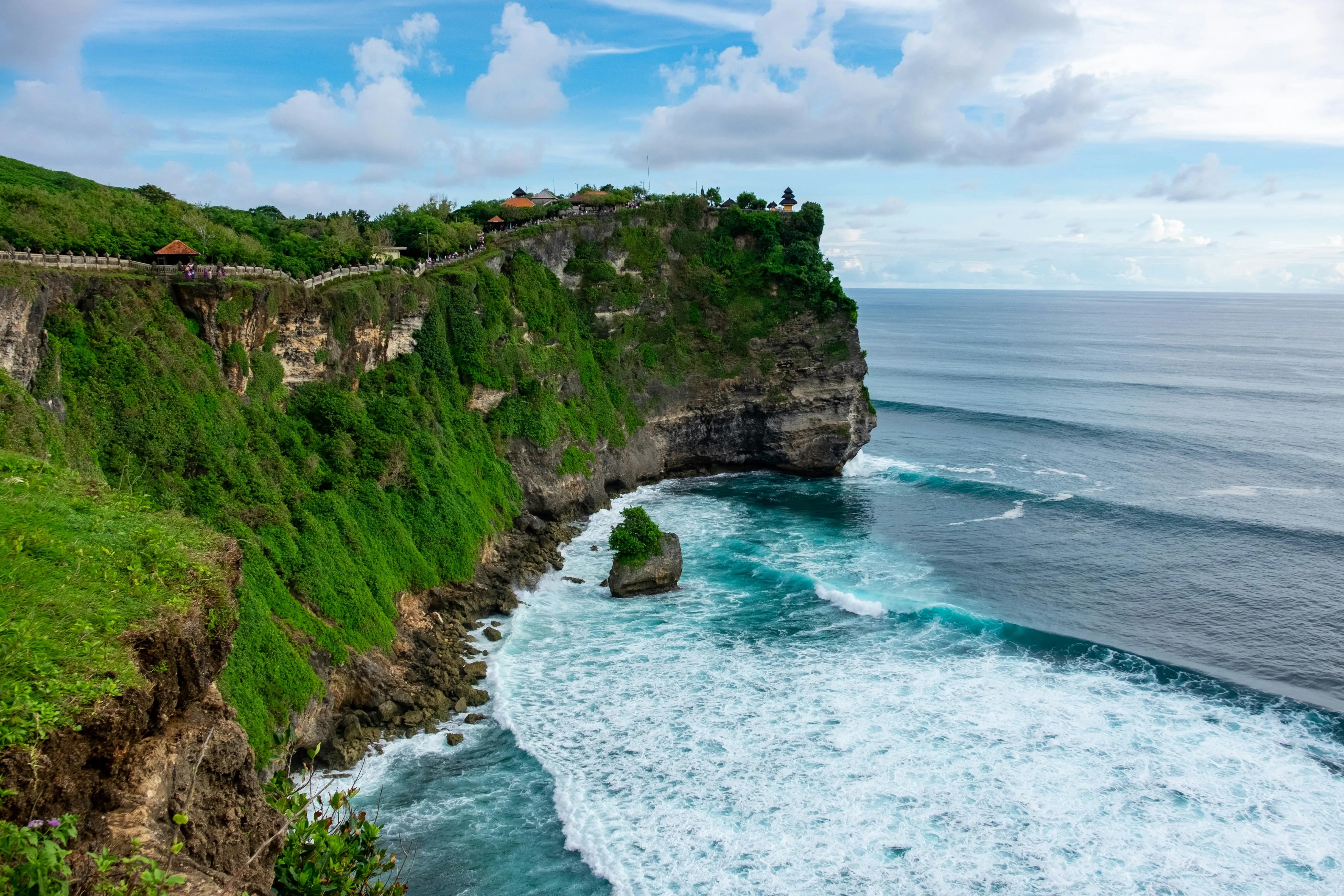
A striking stone temple sitting on a cliff. Waves are detonating below. The sun is melting into the horizon. That’s Uluwatu Temple... and yes, it really does look like that in real life!
But this place isn’t just a sunset backdrop. It’s one of the most important temples in Bali, a spiritual anchor point for the island and a seriously powerful place to stand for a while.
If you’re staying in Uluwatu, either with Kala Surf or anywhere else, this is something you shouldn’t skip.
We spend a lot of time along this coastline. And visiting the temple is part of understanding where you are. It adds context to the cliffs, the ocean and the culture that shapes the Island of the Gods.
Here’s what you need to know about this cliffside temple and the surrounding natural beauty.
Where Uluwatu Temple actually is
Uluwatu Temple sits between Nyang Nyang Beach and Suluban Beach, home to the infamous cave that leads down to the surf. You can find the exact location here on Google Maps: https://maps.app.goo.gl/GrndSfpitAVCQFPXA
The magnificent location is part of the point.
This is an important sea temple located exactly where land meets ocean. And when you’re standing up there, watching waves roll into Uluwatu Beach below, it all starts to make sense.

A bit of history
The history of Uluwatu Temple goes back to at least the 11th century.
It likely existed earlier, but it was expanded by a Javanese sage named Mpu Kuturan. Later, a Majapahit monk from East Java (Dang Hyang Nirartha) came through and shaped the site further, making Uluwatu Temple one of Bali's most iconic locations. Here are a few more facts about Uluwatu Temple:
- According to local belief, Dang Hyang Nirartha attained moksha here, which is spiritual liberation/spiritual oneness
- That story matters because Uluwatu isn’t just scenic. It’s one of Bali’s spiritual pillars
- It’s dedicated to Sang Hyang Widhi Wasa in his form as Shiva Rudra (sometimes written Siva Rudra), part of the Hindu trinity
- For Balinese Hindus, this form represents protection and cosmic balance
- Uluwatu is also one of the six key temples believed to guard the island
- These directional temples sit around Bali’s perimeter to maintain spiritual balance
- Alongside Tanah Lot Temple and several other key temples, it forms a protective network around the island
More recently, Uluwatu has been at the center of conversation around development and preservation. Plans and discussions around coastal protection, including a proposed seawall along parts of Bali’s southern coastline, have raised concerns about environmental impact and the long-term effect on surf breaks and cliffside ecosystems. If you want to go deeper on this, this article breaks it down well.
It is a reminder that places like Uluwatu are not just iconic, they are fragile, and the balance between protection and overdevelopment is still being figured out.
What it’s like inside the temple grounds
We don't want to give too much away here. You should discover this ancient relic in person.
That said, once you’re through the entrance, you’ll walk past traditional split gates and onto stone paths hugging the cliff that make for a very dramatic introduction.
The temple grounds are simple but striking. You’ll see:
- Traditional Balinese architecture
- Ancient sculptures
- Padmasana shrines
- A Brahmin statue facing out toward the ocean
The main shrine is off-limits unless you’re there to pray. That’s important. This is a holy place, not just a viewpoint. Within the wider temple area, you’ll also find Pura Dalem Jurit Temple, a small temple that plays a role in ceremonies.
To be honest, it’s not flashy. Nor is it oversized or in your face. But it carries weight. You can feel that pretty quickly.
Let’s talk about the monkeys
Wild monkeys dwell all around the temple... and they’re bold, to put it politely.
They’ve learned that sunglasses, phones and loose hats are fair game. There are plenty of stories about monkeys snatching visitors' belongings and negotiating them back for snacks. They’re part of the ecosystem here. Just stay alert and follow these simple rules:
- Don’t carry loose items
- Hold onto your glasses
- Don’t antagonise them
Side note: we do not recommend bringing food in to feed the monkeys. It is one of the fastest ways to get mobbed or have one jump on you.
Ready to Surf in Bali? Secure Your Spot Now!
The Kecak dance at sunset
Ever heard of the Kecak dance? This is one of the best places to see it in Bali.
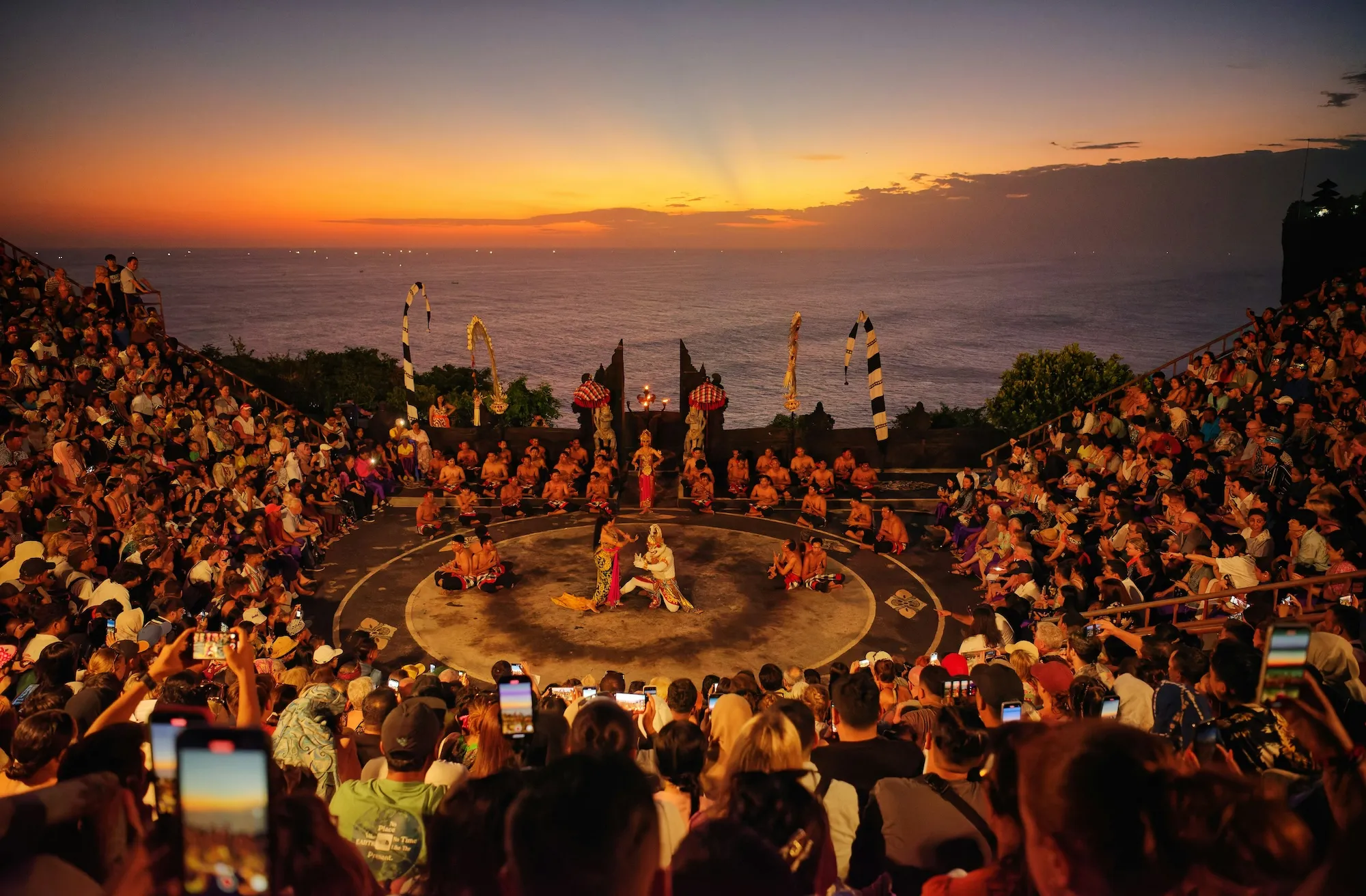
Every evening, there’s a Kecak dance performance held in an open-air amphitheatre facing the ocean. As you're spoiled with another beautiful sunset, performers sit in a circle chanting rhythmically while actors retell the Ramayana story of Prince Rama and Princess Sita.
There are flames. There’s chanting. Bold colours light up the sky. It’s sometimes also called the Kecak fire dance and it’s intense in the best way.
The timing is deliberate. The dance performance starts before sunset. This way, you get those splendid sunset backdrops mid-show. It’s popular for a reason.
Local tip: If you’re staying in Uluwatu, go earlier in the day to buy your tickets, then come back and line up at least 1 hour before the show to get a good seat. Also bring something to sit on like a jacket or small towel, the seating is concrete and your butt will feel it after a while.
When to go and what to know
If you’re visiting Uluwatu Temple, timing makes a difference.
- Opening hours usually run from morning until early evening
- There’s a standard entrance fee
- The best time to visit is either early morning (quieter) or late afternoon (for sunset)
It’s roughly about an hour from most of southern Bali, depending on traffic.
Dress matters too. You’ll need to dress modestly. Sarongs and sashes are provided at the entrance, but wearing something respectful from the start goes a long way.
This is part of Balinese culture, not just a tourist stop.
Why it matters... especially if you’re here for surf
If you’re staying around Uluwatu, you’re probably here for the ocean.
Maybe you’ve already surfed all the surf spots on the Bukit Peninsula. Maybe you’ve stood on the cliff watching the waves break below. What makes this place special is that the temple and the surf share the same stretch of coast. You needn't cross the island or take a boat to get your cultural hit!
At Kala Surf, we always tell guests that understanding Bali isn’t just about knowing the best tide. It’s about understanding why the coastline matters spiritually as well as physically.
Frequently asked questions
Q. Where is Uluwatu Temple located?
Right here: https://maps.app.goo.gl/GrndSfpitAVCQFPXA
Q. Why is Uluwatu Temple important?
It’s one of Bali’s six directional temples, believed to protect the island and maintain spiritual balance.
Q. What is Pura Luhur Uluwatu or Pura Uluwatu?
That’s the full name of Uluwatu Temple... a major sea temple dedicated to a form of Shiva.
Q. Can I go inside the main shrine?
No. The inner sanctuary is reserved for worshippers.
Q. What should I wear?
Dress modestly. Sarongs and sashes are required and provided. Check out our packing list if its your first time in Bali.
Q. Are the monkeys dangerous?
Yes, they can be. We don’t recommend getting close, feeding them, or making eye contact. They’re unpredictable and will grab loose items if given the chance.
Q. When is the best time to visit?
Late afternoon for sunset and the Kecak dance or early morning for fewer people.
Q. How long should I allow?
Around 1.5 to 2 hours... longer if you’re watching the dance.
Q. Is it worth visiting if I’m mainly here for the surf?
Yes. It gives real context to the coastline you’re surfing and some insight into the Balinese people.
Q. Is Uluwatu Temple in Bali crowded?
It can get busy, especially at sunset and during high season. Mornings are quieter, but we 100% recommend going for the sunset Kecak dance, it’s worth the crowds.
Final thoughts
The Uluwatu Temple isn’t just another stop on a Bali itinerary. It’s one of the island’s anchors. Spiritually, culturally and geographically.
Standing on that cliff, wind coming off the ocean, watching the sky shift from gold to deep blue, you start to understand why this place has mattered for centuries. If you’re spending time in Uluwatu, make time for the temple. Not just for the photo. For the perspective too.
Let us know if you're keen to visit and we'll point you in the right direction!
More blogs you might like

FAQs
Find answers to your last-minute questions about your upcoming surf adventure with us.
Our packages include accommodation, daily surf lessons, and access to all camp facilities. We also provide surf gear for your convenience. Additional activities can be booked separately.
Travel insurance is highly recommended to cover any unexpected events. It can protect you against cancellations, medical emergencies, and lost belongings. Please check with your provider for specific coverage.
Booking is simple! Visit our Packages & Prices page to select your desired package. You can complete your reservation online or contact us for assistance.
Kala Surf Camp is located in the heart of Bali, close to the best surf spots. Our camp offers a peaceful environment while being just a short distance from vibrant local culture. You'll enjoy easy access to both surf and relaxation.
Yes, date changes can be made depending on availability. Please contact our support team as soon as possible to discuss your options. We aim to accommodate your needs whenever we can.