


Your Guide to Galungan and Kuningan in Bali

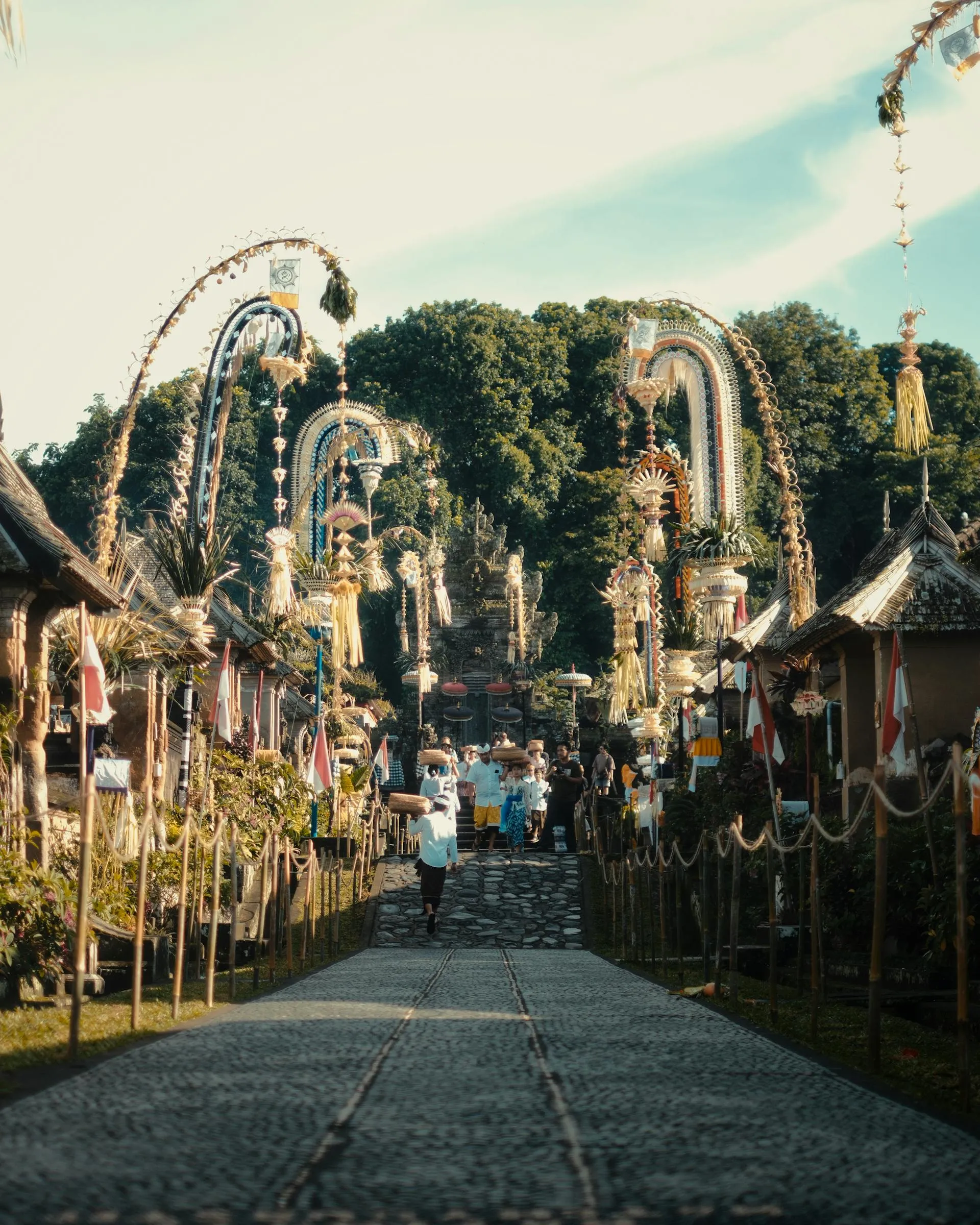
If you spend enough time in Bali, you’ll eventually see tall bamboo poles lining the streets and ask yourself, “What the hell are they for”?
Well, in fact, these bamboo sticks that you see curving gracefully over the road aren’t just a random decoration.
These are penjor. And their appearance signals one of the most important periods in the Balinese Hindu calendar: Galungan and Kuningan.
This 10-day celebration marks the victory of dharma (good) over adharma (evil). It’s a time when families come together and temples swell with worshippers. There are also oodles of whom offerings popping up all over the island, from roadside shrines to family compounds.
For visitors, Galungan and Kuningan offer a chance to witness Bali’s spiritual traditions at their most visible. And if you’re lucky enough to be staying with Kala Surf at the time, you’ll get to see it up close and in the flesh!
What Galungan and Kuningan celebrate
Galungan and Kuningan are major religious celebrations in Balinese Hinduism that focus on spiritual balance and honouring ancestors.
According to Balinese belief, Galungan is the time when ancestral spirits return to earth to visit their families. Homes, temples and villages prepare offerings to welcome them. The celebrations reflect several core ideas in Balinese culture:
- The triumph of good over evil (go, good!)
- Gratitude for prosperity and protection
- Honouring ancestors and spiritual heritage
- Maintaining harmony between the human and spiritual worlds
While daily life continues across the island, the atmosphere becomes noticeably more ceremonial during this period. It’s a super cool time to be on the island. And you’ll definitely sense a wholesome party vibe in the air.
When the celebrations happen
Unlike many global holidays, Galungan does not follow the standard Gregorian calendar.
Instead, it’s based on the Balinese Pawukon calendar, a traditional cycle that lasts 210 days. Because of this, Galungan occurs roughly twice each year. Kuningan is celebrated ten days after Galungan.
Exact dates shift each year, so visitors planning to experience the celebrations should check the current calendar before traveling. Regardless, let us know if you want to line up these events with Bali’s surf seasons.
The 10-day celebration cycle
Galungan is part of a longer sequence of ceremonial days that lead toward Kuningan. The main stages include:
- Penampahan Galungan: The day before Galungan. Families prepare offerings and traditional foods for the celebration
- Galungan Day: The main day of prayer. Balinese families visit temples, present offerings and welcome the return of ancestral spirits
- Manis Galungan: The day after Galungan, often spent visiting relatives and enjoying food together
- Kuningan Day: Ten days after Galungan, marking the return of ancestral spirits to the spiritual realm. Together these ceremonies reinforce spiritual balance and family connections
But what the heck are penjor?
Good question! One of the most recognisable symbols of the celebration is the penjor.
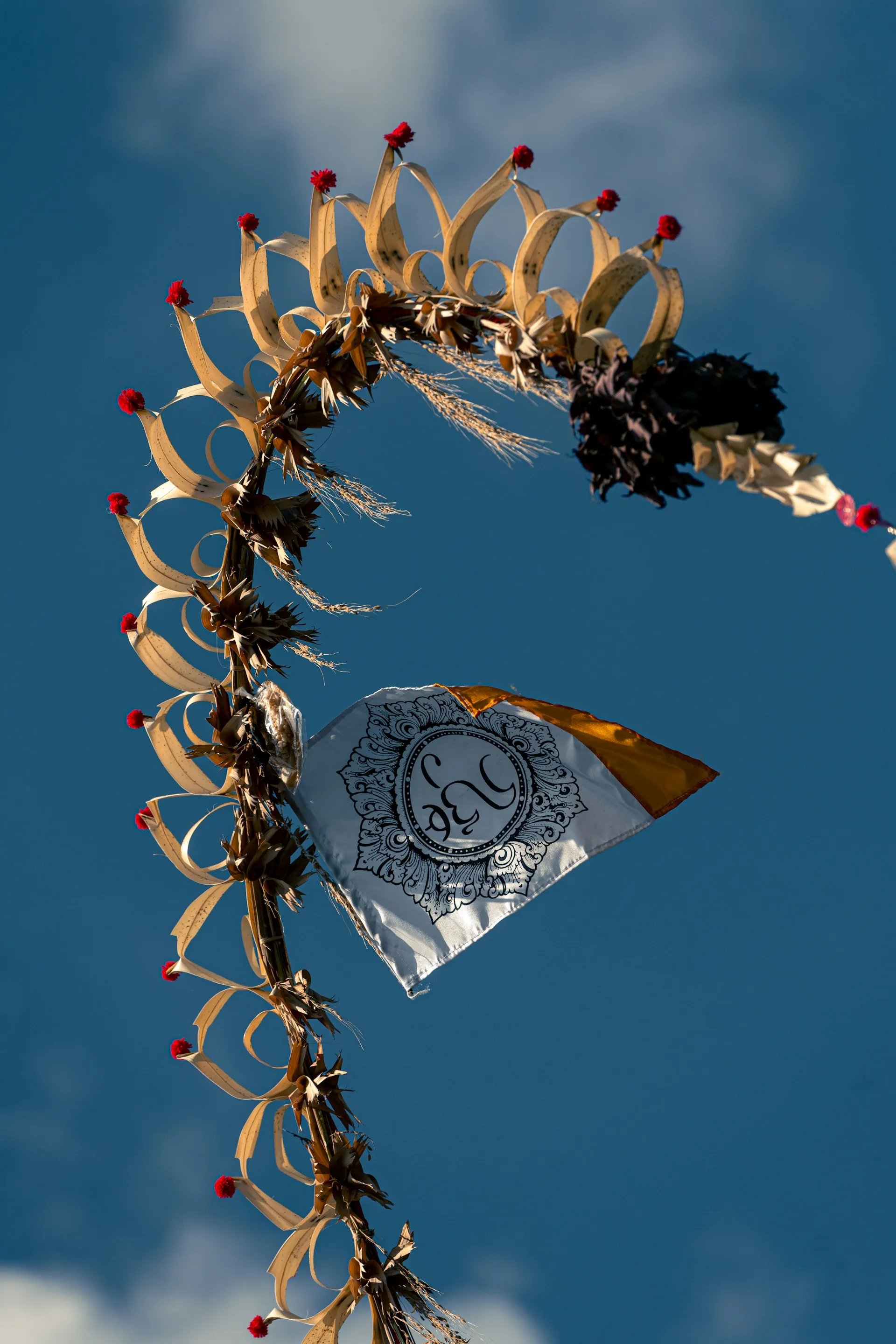
These tall bamboo poles are decorated with woven palm leaves, rice, fruits and symbolic ornaments.
They’re placed outside homes and along village streets in the days leading up to Galungan. And during the celebration, villages across Bali are lined with these decorated poles, creating one of the island’s most distinctive cultural scenes.
Each element of the penjor carries meaning:
- The curved bamboo pole represents sacred mountains (particularly Mount Agung)
- Woven coconut leaves symbolise creativity and prosperity
- Rice and agricultural products express gratitude for abundance
- Offerings at the base honour the spiritual world
Side note: We highly recommend jumping on a scooter and driving around as much as possible to take it all in. You’ll find some of the best penjor down random side streets.
You’ll also notice more elaborate and oversized penjor around areas like Canggu and Ubud. Just keep in mind they’re sometimes taken down early if rain is coming, so they don’t get damaged.
Ceremonies and family traditions
Like Nyepi, Galungan and Kuningan are strongly centred around family and temple worship. During the celebration, Balinese families typically:
- Visit family temples and village temples
- Prepare offerings and ceremonial decorations
- Wear traditional clothing during prayers
- Gather with relatives to share food
Women often carry large offerings to temples, while priests lead prayer rituals and blessings.
Although these ceremonies are religious rather than tourist events, visitors often witness them while travelling around the island.
Side note: If you’re in the Uluwatu area, Uluwatu Temple is one of the best places to experience this. It sits right on the cliffs and is one of Bali’s most iconic temples. There’s also been some controversy around a seawall project being built to protect it from long-term erosion.
Ready to Surf in Bali? Secure Your Spot Now!
Food prepared during Galungan
Food preparation is an important part of the celebration!
Families prepare a variety of traditional dishes both for offerings and communal meals. Some of the most common foods include:
- Lawar: A mixture of vegetables, coconut and minced meat
- Satay (sate): Grilled skewered meat
- Babi guling: Roasted suckling pig
- Yellow rice (nasi kuning): Particularly associated with Kuningan
Preparing these meals together is part of the tradition and helps strengthen family connections during the celebration.
If you’re in Uluwatu and want to try some of these for yourself, check out our favorite warungs here.
FAQ: Galungan and Kuningan in Bali
Q. What is Galungan?
Galungan is a major Balinese Hindu celebration marking the victory of good (dharma) over evil (adharma) and the return of ancestral spirits to earth.
Q. Does it cost money to see these celebrations?
Nope! They’re both free to view. Get more help budgeting for your Bali trip.
Q. What is Kuningan?
Kuningan is the final day of the celebration, occurring ten days after Galungan. It marks the moment when ancestral spirits return to the spiritual realm.
Q. How often do Galungan and Kuningan occur?
They follow the Balinese Pawukon calendar, which means the celebrations happen roughly twice each year.
Q. What are penjor?
Penjor are decorated bamboo poles placed outside homes and along streets during Galungan. They symbolise prosperity, gratitude and devotion.
Q. Why is yellow important on Kuningan?
The word kuning means yellow in Indonesian. Yellow rice and yellow-themed offerings are used during Kuningan ceremonies.
Q. Can tourists watch Galungan ceremonies?
Yes. Visitors are welcome to observe respectfully, especially around temples and villages.
Q. What should visitors wear when visiting temples?
A sarong and sash should be worn when entering temple grounds, along with modest clothing.
Final thoughts
Galungan and Kuningan are two of the most important celebrations in Balinese culture and if you've ever wanted to see what the island looks like when it's fully alive, this is it.
The ceremonies are about honouring ancestors, keeping family close and marking the eternal push and pull between good and evil. It's not a performance put on for visitors. It's just Bali being Bali. So if you're thinking about when to come, this time of year is worth the trip.
Book your stay with Kala Surf and experience Bali during one of its most special times of year!
More blogs you might like
FAQs
Find answers to your last-minute questions about your upcoming surf adventure with us.
Our packages include accommodation, daily surf lessons, and access to all camp facilities. We also provide surf gear for your convenience. Additional activities can be booked separately.
Travel insurance is highly recommended to cover any unexpected events. It can protect you against cancellations, medical emergencies, and lost belongings. Please check with your provider for specific coverage.
Booking is simple! Visit our Packages & Prices page to select your desired package. You can complete your reservation online or contact us for assistance.
Kala Surf Camp is located in the heart of Bali, close to the best surf spots. Our camp offers a peaceful environment while being just a short distance from vibrant local culture. You'll enjoy easy access to both surf and relaxation.
Yes, date changes can be made depending on availability. Please contact our support team as soon as possible to discuss your options. We aim to accommodate your needs whenever we can.